Creating Safe Spaces for Learning During War: Zeina’s Story from Lebanon
March 30, 2026
Translated from Arabic - original text here.
More than 350 public schools are currently being used as shelters, disrupting the education of around 100,000 students and further limiting access to safe, stable learning environments (UNICEF).
With over ten years of experience working with children and caregivers, Zeina has dedicated her career to education and psychosocial support. Today, as a Can’t Wait to Learn Education Assistant with War Child in Lebanon, she helps create safe, supportive spaces where children can continue learning, even amidst war.

Zeina is a Can't Wait to Learn Education Assistant for War Child in Lebanon
“I believe that children, even in the most difficult circumstances, have a huge capacity to keep learning and growing", she says. “But they need the right environment to do so.”
Zeina’s work is also heavily influenced by her perspective as a mother, shaping how she connects and engages with children every day. “When a child feels that they are heard and understood, this reflects directly on their behavior and interactions, as well as their ability to learn and grow,” she explains. This belief sits at the heart of her work: listening first, then teaching.
Today, working in Lebanon means navigating airstrikes, supporting families who have had to flee their homes, all while managing your personal life and situation. For Zeina, balancing her commitment to children with her own protection is essential.
“We always strive to be present and available to support children and families, but at the same time it is equally important to remain mindful of our own personal safety... because our ability to continue this work depends on our ability to protect ourselves and work in a safe environment.”
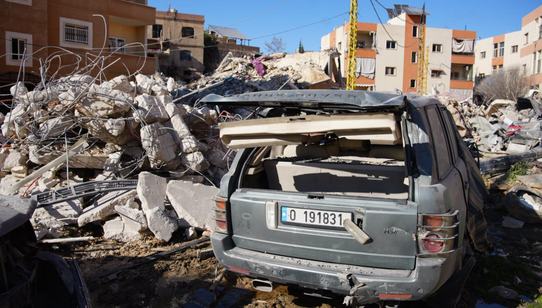
Creating a safe and reassuring environment is therefore essential. Only when children feel secure can they truly engage in learning. However, in Lebanon this is particularly difficult at the moment. The fear and reality of ongoing airstrikes, buildings damaged and destroyed, and nowhere safe to go all impact children’s ability to learn.
“Many children are under constant psychological pressure,” she says. “This affects their concentration and ability to learn.” In response, Zeina and her colleagues use interactive teaching methods and integrate psychosocial support into learning activities, helping children feel safe, engaged, and able to express themselves.
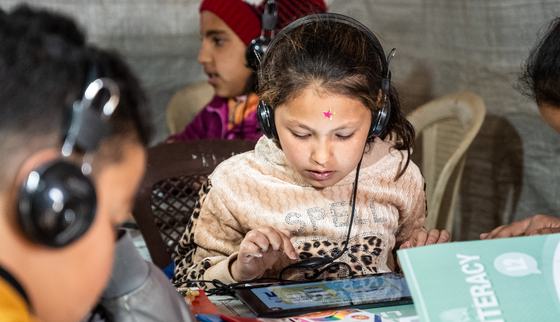
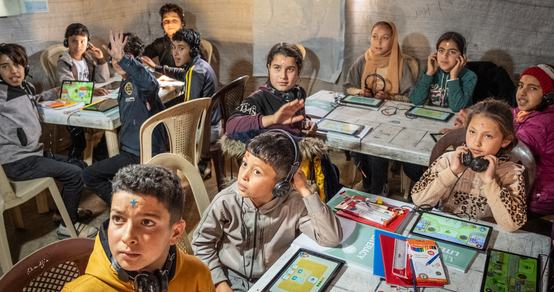
Can't Wait to Learn - War Child's education methodology - is being implemented across Lebanon (including in Baalbek as pictured) to ensure that even in crisis and the devastation it leaves behind, children can continue to learn.
For Zeina, the impact of her work is visible in everyday moments. “When a shy child starts participating, or when parents tell us their children are excited to attend sessions — that’s when I know we are making a difference.” These small changes signal something bigger: children beginning to regain confidence, stability, and a sense of normalcy. “In these circumstances, our role is not just education,” she says. “It’s also about helping children feel safe again.”
One experience, in particular, has stayed with Zeina. After two years of disrupted learning during the COVID-19 pandemic, she was supporting diagnostic assessments in a school in the Bekaa. One young student left the room in tears. “He said, ‘I don’t know how to read. I don’t even know the letters.’” Instead of continuing the assessment, Zeina paused.
“I reassured him that the assessment wasn’t about marks,” she recalls. “It was to help us prepare activities and stories that matched his level.”
But that moment reinforced something fundamental. “It reminded me that we must understand children’s feelings before focusing on academic performance,” she says. “Psychosocial support is not separate from learning; it is part of it.”
Zeina’s story is a powerful reminder that, even in the most challenging environments, learning is still possible, when children are given safety, support, and the chance to be heard.
* name changed to protect identity