
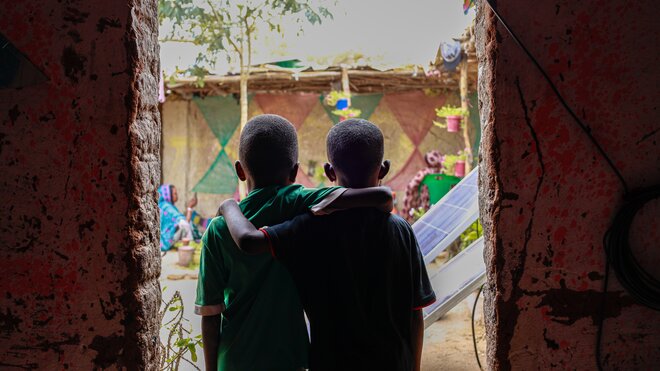
Same blackboard, different futures
Across Darfur, different classrooms are creating common ground through learning, friendship and play.
We help children and young people access and stay in education, giving them the skills and opportunities to shape their futures.
Conflict can disrupt children’s education in many ways. Schools are often damaged, destroyed or used as shelters, while displacement can leave children and teachers unable to attend. For children, losing access to school means losing not only the chance to learn, but also a sense of safety, routine and connection.
With 234 million children in conflict needing support to access quality education and 93 million out of school, education can provide vital stability, safety and the skills children need to build a future beyond conflict. But this depends on supportive learning environments, including well-supported teachers and caregivers and access to psychological support.
in conflict need support to access quality education
When I was in the 9th grade, the schools were closed. I became mentally depressed.
Education cannot be delivered in isolation from a child's wider wellbeing, which is why our approach works across key aspects of a child’s life. A child's ability to learn depends on far more than what happens in the classroom - it depends on their safety, their home environment, the adults around them and their mental health. A child who is unsafe, unsupported or struggling psychologically will not learn effectively.
War Child’s evidence-based methodologies can also stand alone to target a specific learning challenge, and go through a process of contextual adaptation in co-creation with children, teachers and governments in each country.


Closing the learning gap

Teacher wellbeing

School attendance, re-entry and retention
Nothing happens in isolation. All of our methodologies are designed to integrate with our child protection and mental health and psychosocial Care Systems. Each can be tailored to the specific context you are working in.
Across Darfur, different classrooms are creating common ground through learning, friendship and play.

In Masisi, a War Child methodology demonstrates how teacher psychosocial wellbeing can be measured and strengthened, even under pressure.
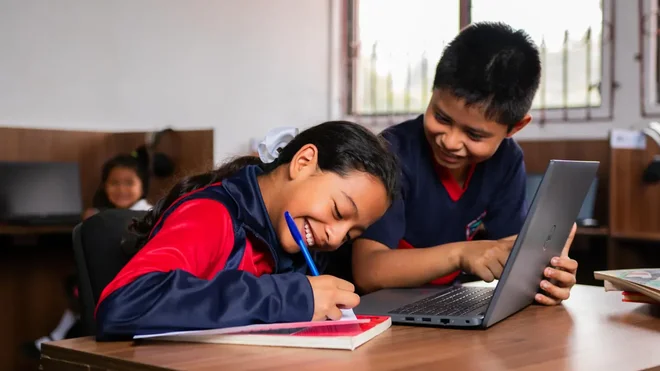
Can’t Wait To Learn, hosted by War Child, contributed a think piece to the new UNICEF and EdTech Hub report, Shaping the Future of Digital Education: A Global Conversation on How to Move Beyond Digital as Usual.

This study aimed to develop an intervention to improve consistent school attendance in participation with caregivers, teachers, and other stakeholders, in refugee settings in Uganda.

The International Rescue Committee (IRC), together with consortium partners Plan International and War Child Alliance, and with support from the LEGO Foundation, is launching PlayMatters 3.0, the next phase of a flagship education initiative supporting teachers improve holistic learning and wellbeing through Learning through Play, for pre-primary and primary school children.

