A crisis that reached the classroom
For more than three decades, the province of North-Kivu in the eastern Democratic Republic of Congo has lived through a chronic security crisis fueled by dozens of armed groups, land and intercommunal tensions, and the rivalry of regional actors. In the territories of Masisi, Rutshuru and Minova, armed conflict, mass displacement and natural disasters have had a devastating impact on the education sector and on children’s learning. Schools have been looted or damaged, classrooms are overwhelmed by the arrival of displaced pupils, and teachers are forced to work without respite despite irregular incomes.
Since January 2025, the situation has sharply deteriorated. An armed group, the Movement du 23 mars (M23), took control of the city of Goma and eventually most of the Masisi territory. State services have been reduced or suspended; the salaries of public servants - including teachers - are no longer paid regularly; roads are subject to multiple checkpoints, and humanitarian access is restricted. In this environment, teachers remain on the front line, continuing to teach in overcrowded schools, crossing insecure areas daily to reach their classrooms, and carrying their own psychological burden whilst working to support students marked by war, displacement, and loss.
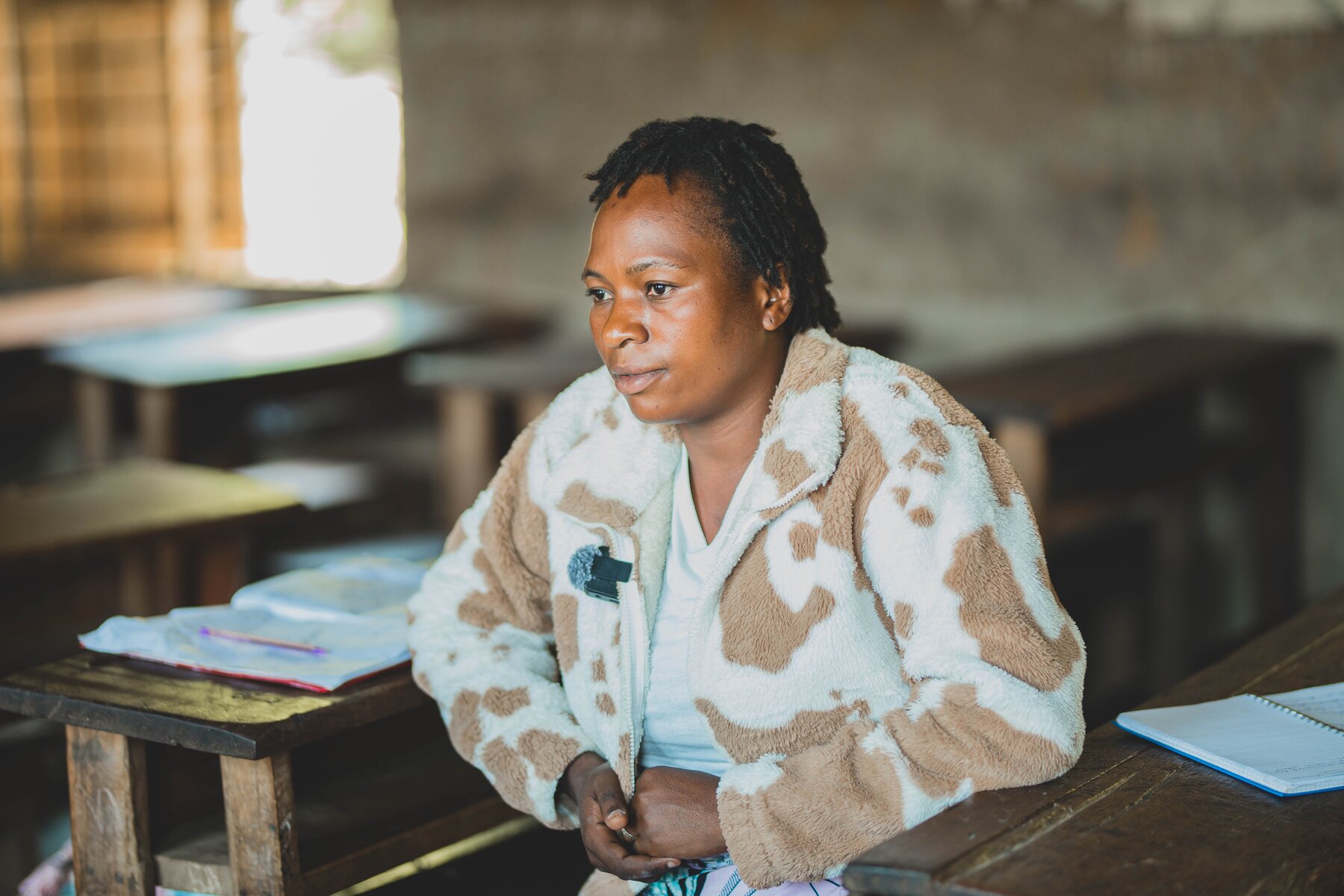
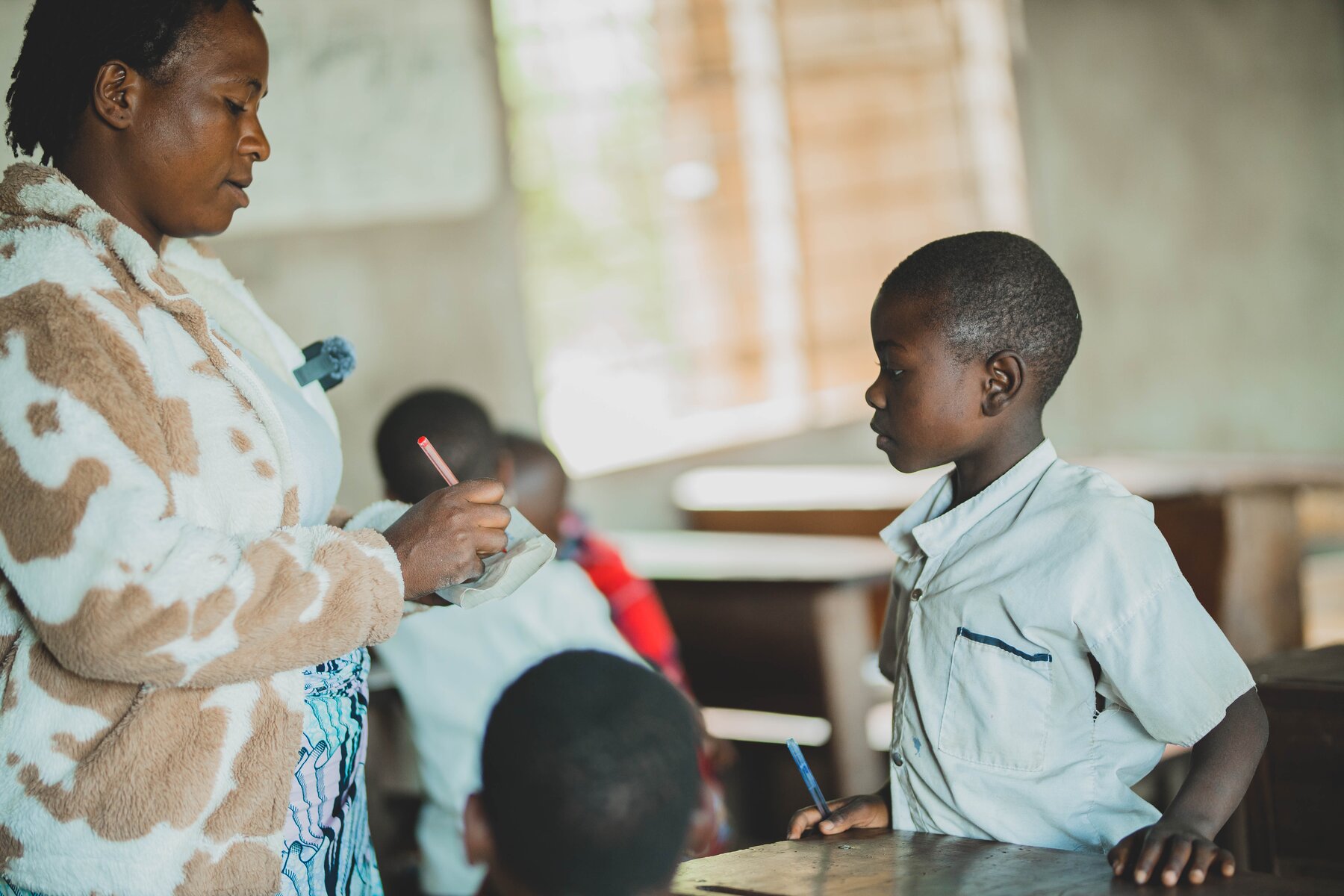
Olive is a fourth-grade teacher from Hodari Primary School. She recalls the mental toll that conflict took on teachers and children alike.
During this time of conflict everyone is stressed. We teachers are stressed, the children are stressed, and our senior students are stressed too.