
Skip to content

Mental health and psychosocial Support

The challenge

Conflict can leave children with invisible wounds that affect their wellbeing, development and future. Displacement, violence and loss can lead to anxiety, depression, post-traumatic stress and other mental health issues.

For example, a survey from Gaza in 2024 showed that 96% of children felt death was imminent, and nearly half believed they will die because of the war.

Yet more than 90% of children in conflict-affected areas who need mental health support don’t receive it, often due to limited services, stigma around mental health, and a lack of support for caregivers.

Without support, the effects of conflict can shape children’s wellbeing, development, relationships and ability to imagine a future. Unaddressed trauma can also be passed between generations, making mental health support essential for children to recover and thrive.

90% of children

Over 90% of children in conflict-affected areas who need mental health care don’t receive it.

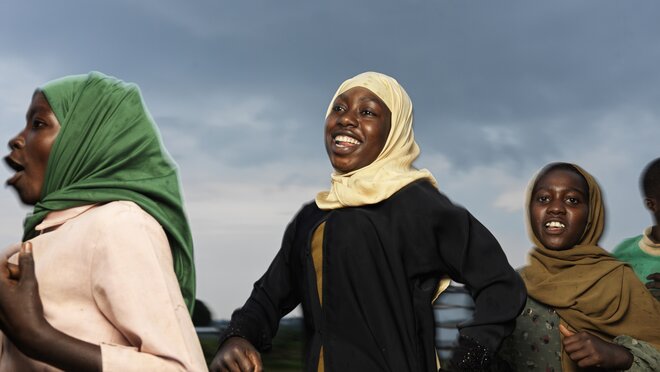
I was worried all the time before coming to Uganda because of what was happening in my country.

Umomubana, 16 years old Fled Sudan to seek safety in Uganda

What we do

Mental health and psychosocial support for children in conflict requires working across the entire environment that surrounds a child - with families and in schools and communities - in order to recognise mental health and wellbeing concerns early and respond to it well. 

We support caregivers and teachers, who are often the first to notice distress but the least equipped to respond to it. We work directly with children and adolescents to build the emotional skills that formal support systems frequently fail to provide. 

We strengthen the ability of communities to detect mental health needs early. And we tackle the stigma that keeps families from seeking help in the first place.


War Child’s evidence-based mental health and psychosocial support methodologies: 

Strengthening parent wellbeing and skills

  • Evidence-based
  • Mental health and psychosocial support

Supporting adolescent mental health

  • Evidence-based
  • Mental health and psychosocial support

Mental health needs detection tool

  • Evidence-based
  • Mental health and psychosocial support

Whole-family psychosocial support

  • Evidence-informed
  • Mental health and psychosocial support

Play and movement-based psychosocial support

  • Evidence-based
  • Mental health and psychosocial support

Ensuring quality mental health support

  • Evidence-based
  • Mental health and psychosocial support

Part of an integrated Care System

Nothing happens in isolation. All of our methodologies are designed to integrate with our child protection and education Care Systems. Each can be tailored to the specific context you are working in.

Child Protection Education

Latest

A community case detection tool to promote help-seeking for mental health care among children and adolescents in Ugandan refugee settlements: a stepped wedge cluster randomised trial

A community case detection tool to promote help-seeking for mental health care among children and adolescents in Ugandan refugee settlements: a stepped wedge cluster randomised trial

Strategies to promote mental health care help-seeking among children are needed, especially in lowincome and middle-income countries and in complex settings. The aim of this trial was to compare a vignette-based, community-level, proactive case detection tool (CCDT) against standard awareness raising for promoting mental health help-seeking among children and adolescents.

Optimising and personalising task-shared psychosocial interventions for common mental disorders: a Bayesian component network meta-analysis of individual participant data

Optimising and personalising task-shared psychosocial interventions for common mental disorders: a Bayesian component network meta-analysis of individual participant data

Although psychosocial interventions delivered by non-specialist providers effectively treat common mental disorders such as depression and anxiety, the treatment-specific elements driving their efficacy remain largely unknown. Our aim was to compare and rank the efficacy of the individual active components of task-shared psychosocial interventions and to predict efficacy using individual participant characteristics.