
TeamUp
Children are extremely resilient - but they need the chance to process their experiences. Developed in 2015, TeamUp is a non-verbal movement-based methodology proven to increase children’s psychosocial wellbeing, enhance health and reduce traumatic stress.

Meet Felix Odera, TeamUp Global Partnerships Coordinator from South Sudan. Once affected by conflict himself, Felix joined TeamUp as a facilitator – a journey that helped him heal, support others, and eventually become part of the global team.
Why
Invisible wounds of war
Not all wounds caused by conflict are visible. For children, living through violence, displacement and uncertainty can have a lasting impact on their mental health and wellbeing. They may become fearful, withdrawn or constantly on edge. Others may struggle to feel safe, manage their emotions, connect with others or feel hopeful about the future.
The effects of prolonged stress can also impact children’s emotional, physical and cognitive development, and can continue long after a crisis has passed.
Yet during conflict, the safe spaces children need to play, learn, connect and simply be children are often among the first things to disappear.
Creating safe, supportive environments can make a difference. Play and movement, predictable routines, positive experiences with peers and trusted, supportive adults can all help children feel safe, build resilience and strengthen their wellbeing. These experiences can help children cope with adversity and reduce the longer-term impact of chronic stress.
Making a positive impact
Research shows that TeamUp improves children’s wellbeing

A quasi-experimental study in Northern Uganda in 2024 found that children joining TeamUp showed significantly more improvements in terms of emotional and psychosocial wellbeing, satisfaction with and attitude toward school, traumatic stress, health-related quality of life, physical health social connectedness and sense of agency compared to the control group which continued care as usual.
Latest news from TeamUp
- Child protection
- Mental health and psychosocial support
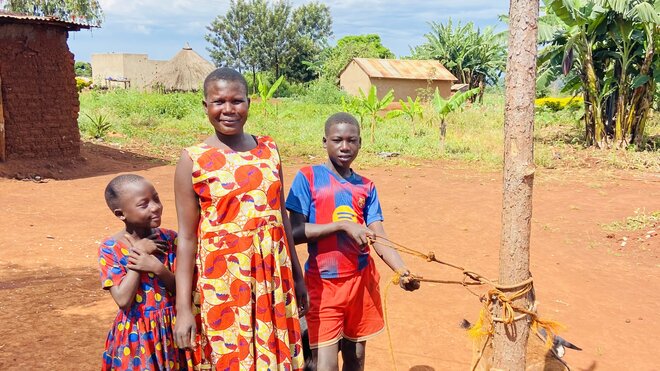
Providing life-saving protection to Uganda's growing refugee community
Uganda remains Africa’s largest refugee host country, sheltering over 2,000,000 refugees and asylum seekers as of September 2026. As these vulnerable communities continue to grow, the critical services needed to support them are experiencing severe funding shortages.

- Mental health and psychosocial support
The power of play: an evidence-based approach to supporting children’s development
This International Day of Play, we speak with Yara Sleiman, Research Coordinator at War Child, about the transformative role of play in children’s mental health, behaviour, and development, and how evidence-based research is reshaping the way we understand its importance.

- Mental health and psychosocial support
Rebuilding safety and childhoods in Gaza: Kareem’s story
In Gaza, children and their families are being supported not only to return to learning, but to rebuild a sense of safety, confidence, and hope. This is the purpose of War Child's project Reconnecting to Education implemented by a local partner in Gaza, with support from READ Foundation.

- Mental health and psychosocial support
Space to breathe – TeamUp and BeThere in Democratic Republic of Congo
In the Masisi Territory located in the North Kivu province of the Democratic Republic of the Congo, children and caregivers traumatised by violence and displacement are learning to breathe again thanks to mental health and psychosocial support methodologies TeamUp and Bethere, supported by the Dutch Relief Alliance.

- Mental health and psychosocial support
Strengthening TeamUp through data: the partnership between War Child and Pipple
Every child has the right to safety, education and psychosocial support. Especially in times of war. War Child supports children affected by armed conflict to cope with its impact, with one clear goal: to take the war out of a child. So, there is once again space to laugh, play and catch their breath. To make this impact truly visible, War Child is working with Pipple on a smart, data-driven solution: the Attendance App.

- Mental health and psychosocial support
Recovery efforts in Sri Lanka: TeamUp’s role in strengthening children’s wellbeing after Cyclone Ditwah
Cyclone Ditwah has caused the worst flooding and landslides Sri Lanka has seen in decades, destroying over 86,000 homes and taking more than 630 lives. Nearly 70,000 people, many of them children, are living in temporary shelters, including schools converted into emergency accommodation.
Often used in conjunction with

Mental health needs detection tool
- Evidence-based
- Mental health and psychosocial support

Supporting adolescent mental health
- Evidence-based
- Mental health and psychosocial support

Strengthening parent wellbeing and skills
- Evidence-based
- Mental health and psychosocial support
