
EASE
EASE (Early Adolescent Skills for Emotions) is a group-based mental health and psychosocial support intervention for adolescents aged 10 to 15. Developed by the World Health Organization and UNICEF, with technical input from War Child, EASE helps youth to manage difficult emotions and develop healthy coping strategies. Caregivers are supported too, through sessions of their own.

Why
Many young people affected by conflict and violence live with stress, anxiety and low mood everyday, yet support can be hard to find. WHO reports that in low-income countries, between 76% to 85% of people experiencing severe mental health problems are not receiving the treatment they need. For young people living through conflict, the barriers to accessing mental health and psychosocial support can be even greater and can have a lasting impact on their wellbeing, relationships and futures.
Specialist services are often scarce or unavailable, while stigma, cost, distance and disrupted health systems can make it even harder to ask for help.
Making a positive impact
Research shows EASE reduces distress in young people

A controlled trial of 10-14 year old Syrian refugees in Jordan in 2022 found that EASE led to reduced internalising of problems and was associated with reduced distress and less inconsistent disciplinary parenting in caregivers.
Latest news from EASE
- Mental health and psychosocial support
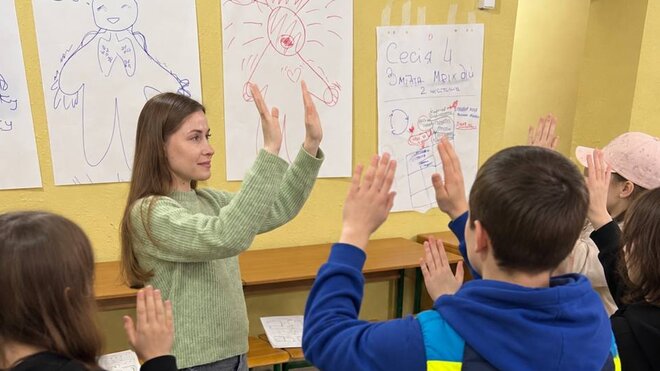
Providing evidence-based psychosocial support for Ukraine's children: World Mental Health Day 2026
Every child deserves support, the chance to be heard, and a future they can look to with hope. The Beyond Trauma consortium is providing evidence-based psychosocial and mental health support to children and young people affected by the war in Ukraine.
- Mental health and psychosocial support
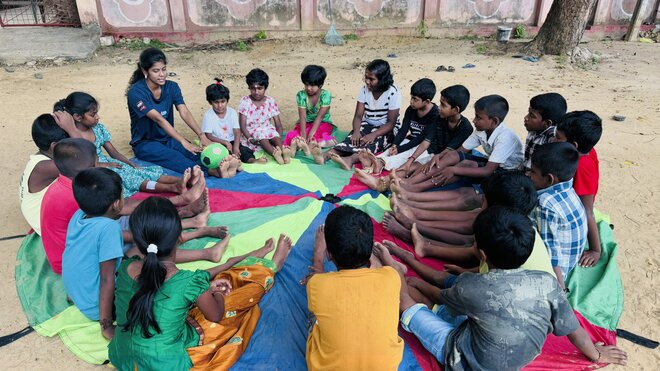
War Child’s care system in practice: Integrating holistic mental health methodologies to support children in Sri Lanka
The mental health needs of children are deeply complex and multi-layered—especially in contexts like Sri Lanka, where many, particularly adolescent girls, live with the silent burden of emotional and psychological trauma. Countless children face abuse, neglect, loss, and isolation. Stigma, systemic failures, and a scarcity of accessible services leave emotional wounds unaddressed.

- Mental health and psychosocial support
How EASE is providing Sudanese refugee families in Uganda with tools to process emotions
As conflict forces children and caregivers from Sudan to seek refuge in neighboring countries, War Child - in collaboration with CARE Uganda - are co-leading a consortium to provide families in need with psychosocial support through the EASE methodology with funding from the European Union.

- Child protection
- Mental health and psychosocial support
World Refugee Day 2025: Protecting children in East Africa
Each year on 20 June, the world recognises World Refugee Day. This annual event serves as a powerful reminder of the millions of lives uprooted by violence, families forced to flee with nothing, and children robbed of safety and certainty. It’s also a moment to honour their strength, resilience, and their right to seek protection.

- Mental health and psychosocial support
Implementing a non-specialist delivered psychological intervention for young adolescents in a protracted refugee setting: a qualitative process evaluation in Lebanon
This study was conducted as part of an RCT of the Early Adolescents Skills for Emotions (EASE) psychological intervention for young adolescents with elevated psychological distress (predominantly with a Syrian refugee background) in Lebanon.

- Mental health and psychosocial support
Evaluation of the Early Adolescent Skills for Emotions (EASE) intervention in Lebanon: A randomized controlled trial
This study evaluates the effectiveness of a new group-based intervention developed by the World Health Organization (Early Adolescent Skills for Emotions; EASE), implemented by non-specialists, to reduce young adolescents' psychological distress among mostly Syrian refugees in Lebanon.
Often used in conjunction with

Strengthening parent wellbeing and skills
- Evidence-based
- Mental health and psychosocial support

Mental health needs detection tool
- Evidence-based
- Mental health and psychosocial support

Play and movement-based psychosocial support
- Evidence-based
- Mental health and psychosocial support
