Skip to content
  • Child protection
  • Mental health and psychosocial support
  • News
  • Stories

Providing life-saving protection to Uganda's growing refugee community

1 Oct 2026

Uganda remains Africa’s largest refugee host country, sheltering over 2,000,000 refugees and asylum seekers as of September 2026. As these vulnerable communities continue to grow, the critical services needed to support them are experiencing severe funding shortages.

For the last six months in the Kiryandongo, Rhino Camp and Nakivale refugee settlements, the Life-Saving Protection Assistance for Refugees Needs in Uganda (LIFESPAN) project has been working to fill this gap and strengthen community-based child protection systems by empowering communities to take an active role in creating safer environments for children.

Our partners Kabarole Research and Resource Centre Uganda (KRC), and the Uganda Refugee Disaster Management Council (URDMC), we have been on the ground, visiting families across these three settlements to assess their needs and provide support wherever we can.

As of September, the project has provided 6,632 children with mental health and psychosocial support through our TeamUp evidence-based methodology.

Developed in 2015 by War Child, UNICEF Netherlands and Save the Children Netherlands, TeamUp is a non-verbal, movement-based methodology that uses play and physical activity to support children’s psychosocial wellbeing and help reduce stress and tension. For the children in Uganda’s refugee settlements, it also provides them with a place of safety and community.
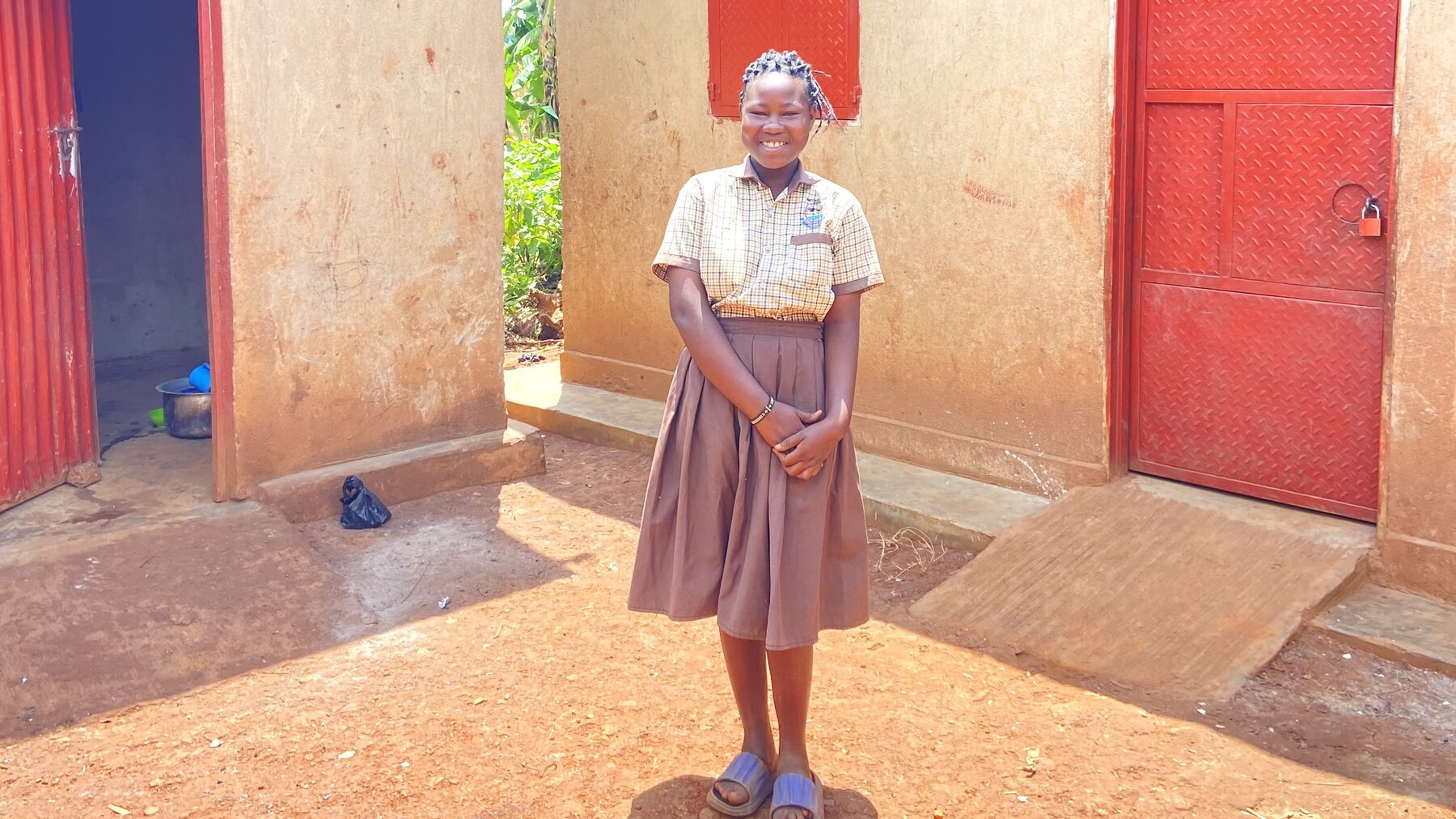
13-year-old Gloria received mental health and psychosocial support through our TeamUp methdology.

13-year-old Gloria and with her family fled from conflict in the Democratic Republic of Congo (DRC) to Uganda five years ago. After her father sustained an injury that prevented him from walking, he required constant care from the family.

“Back home, my father was a doctor but one evening he returned home injured and could no longer walk. I spent my days feeding him and washing him instead of going to school. It was painful to imagine my life only as a caregiver, when I was still a child myself.”

With her family struggling financially and often unable to afford school fees, Gloria was forced to watch from afar as other children learned and played games.  

A TeamUp facilitator noticed her sneaking in to join other students and encouraged her to enroll in the programmme.  

When I joined (TeamUp), I felt happy again. Playing helped me forget my worries. TeamUp made me feel less stressed and reminded me that I am still a child who deserves to play and learn.

As well as psychosocial support, the project has also provided financial aid to strengthen community-based child protection systems across the three settlements. As of September, 2,549 children and their families have received cash support, allowing them to pay for schooling, livestock, and life-changing medical care.  

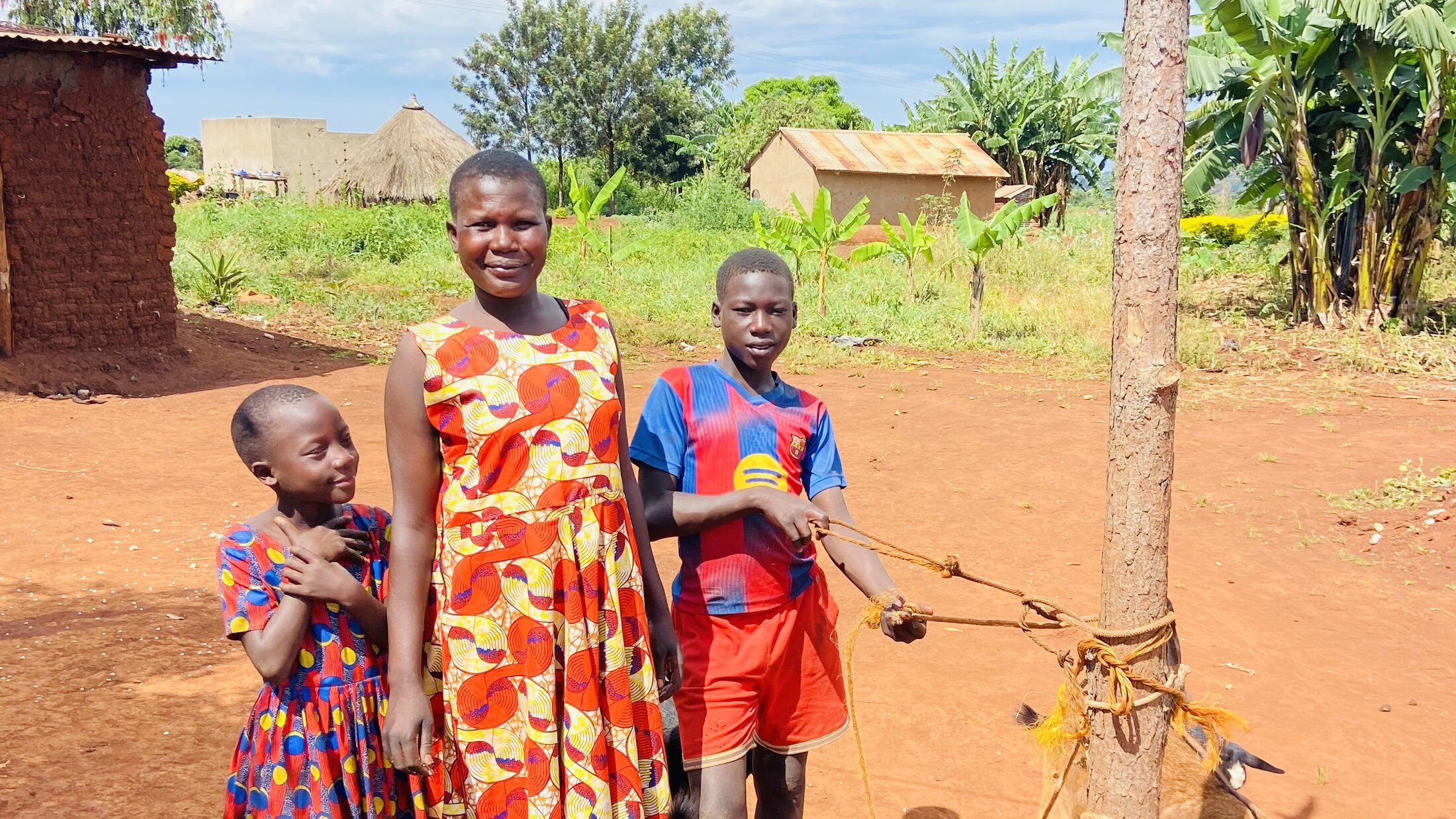
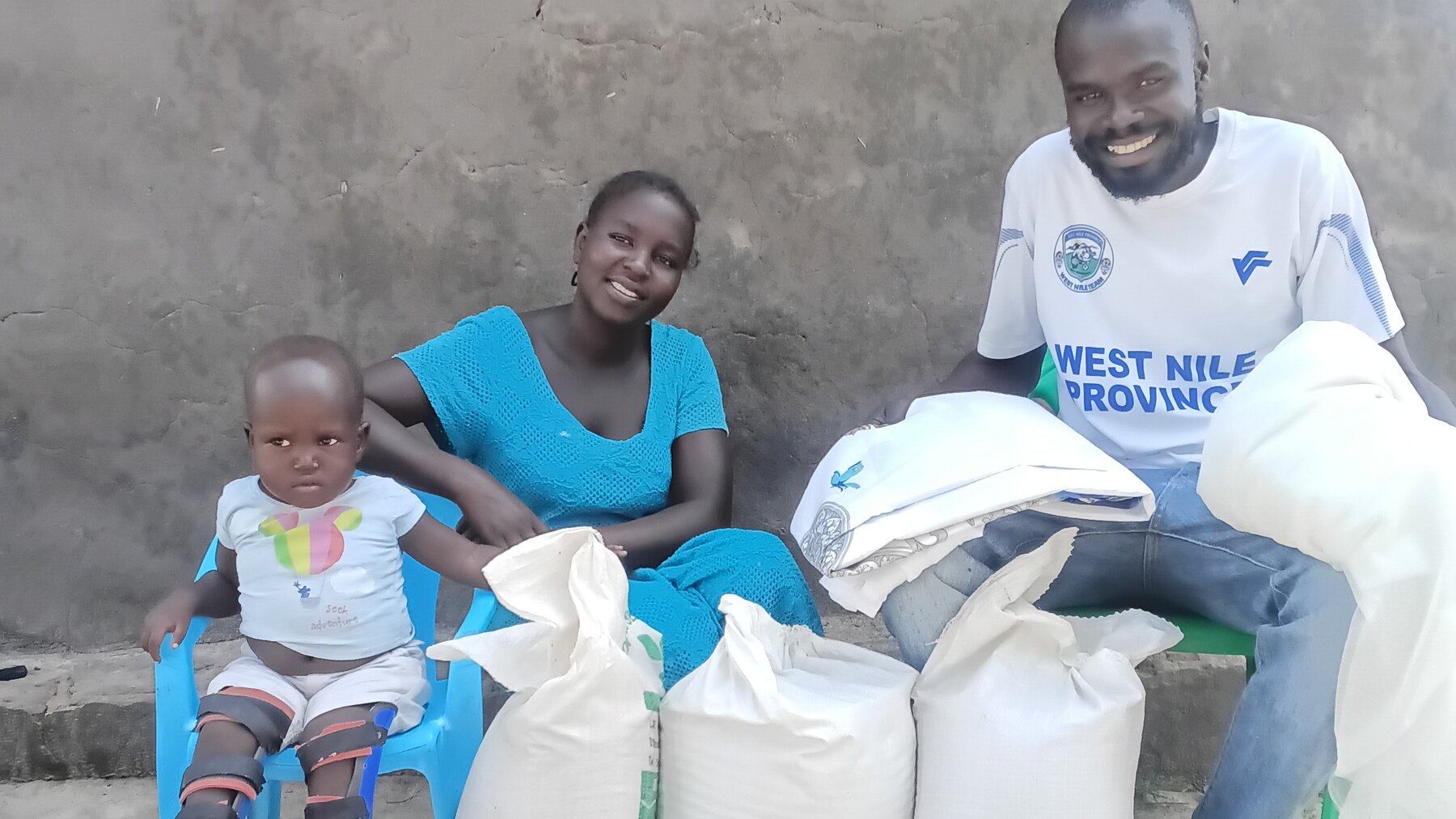
Brenda, a 32-year-old mother from DRC, has a three-year-old child with a medical condition that prevents them from sitting or standing unsupported. After visiting her, KRC provided her with the money to purchase a new assistive device that will help her child to find independence.  

Brenda's child Sonny is now able to stand on his own thanks to cash support from KRC

"From the time my child was born with this condition life has been very difficult for me, this child can’t sit or stand. I have been moving from one place to another looking for help. I had lost hope because all people who come to see my child give me empty promises, but God answered my prayers through KRC.

After buying the assistive device, my child who is attempting to stand unlike before where I used to carry her. She has also started playing with her friends, which is giving me time to do other things in the home.  

I do not have words to thank KRC. Let this support not stop with my child, reach out to more children in the community who are suffering."

As the project draws to a close, our partners have been in the field speaking to beneficiaries of the project and listening to their experience of the process. Feedback like this is essential to shaping our work moving forward, and to making sure everyone receives the support they need smoothly and without delay. A staff member from URDMC says:

We give back to the community that we serve. We are always here; we have always got your back.

About the LIFESPAN project:  

LIFESPAN was funded by the Uganda Humanitarian Fund. It began in April 2026 and will finish in mid-October 2026.  

The project is being implemented by a consortium led by War Child in partnership with CARE International in Uganda, Kabarole Research and Resource Centre Uganda (KRC), and Uganda Refugee and Disaster Management Council (URDMC). 

Related articles

Far from the frontline in Ukraine, but not from the war

Far from the frontline in Ukraine, but not from the war

War Child’s Head of Programmes in Ukraine, Yaroslava Mozghova, and Anna Sydoruk, CEO of Osvitoria, War Child’s partner, explain how no matter where children live in Ukraine, they cannot escape the uncertainty of war.

New War Child report warns aid cuts are leaving children unprotected
  • Advocacy

New War Child report warns aid cuts are leaving children unprotected

A new report from War Child Alliance warns that deep cuts to humanitarian funding are leaving millions of children without access to life-saving protection, education and mental health and psychosocial support. At the same time as these cuts are widening the gap between children and critical support, conflict and violations against children are rising worldwide.