Skip to content

Shams’ story: Rays of light amid war

18 Nov 2026

In October 2025, a “ceasefire” was announced in Gaza, but hostilities continued. Since then, more than 300 children have been killed over 300 days – an average of one child killed every day. For three years, fear, loss and repeated displacement have shaped childhood across Gaza. For eight-year-old Shams, some of her darkest memories began in May 2024, when Israeli forces’ operations intensified in the middle area of the Strip.

Eight months into the war, Shams and her family found themselves trapped in their home, surrounded by fear and uncertainty, constantly having to weigh the risks of every move. As access to basic necessities and essential services continued to deteriorate, staying home was no longer enough to keep them safe. With danger closing in, the family had no choice but to flee in search of safety elsewhere. 

Displacement was only the beginning. Shortly after, her father and uncle were detained, leaving the family without an income or the support and protection they had relied on. The family was forced to flee again, moving two, three times or even more in search of safety. In September 2024, Shams’ eldest brother was injured in an Israeli airstrike, and days later died at the hospital, leaving the family devastated by yet another unbearable loss. 

These experiences placed an enormous burden on Shams’ little shoulders – experiences no child should ever have to endure. In September 2025, the family fled to the central area of the Strip, carrying little of what they owned and facing increasingly difficult living conditions amid overcrowding, rubble and destruction, with extremely limited resources. By then, Shams, like most children in Gaza, could not access education as schools were either destroyed or used as shelters. They had also lost access to safe spaces to play, express emotions and connect with other children. 

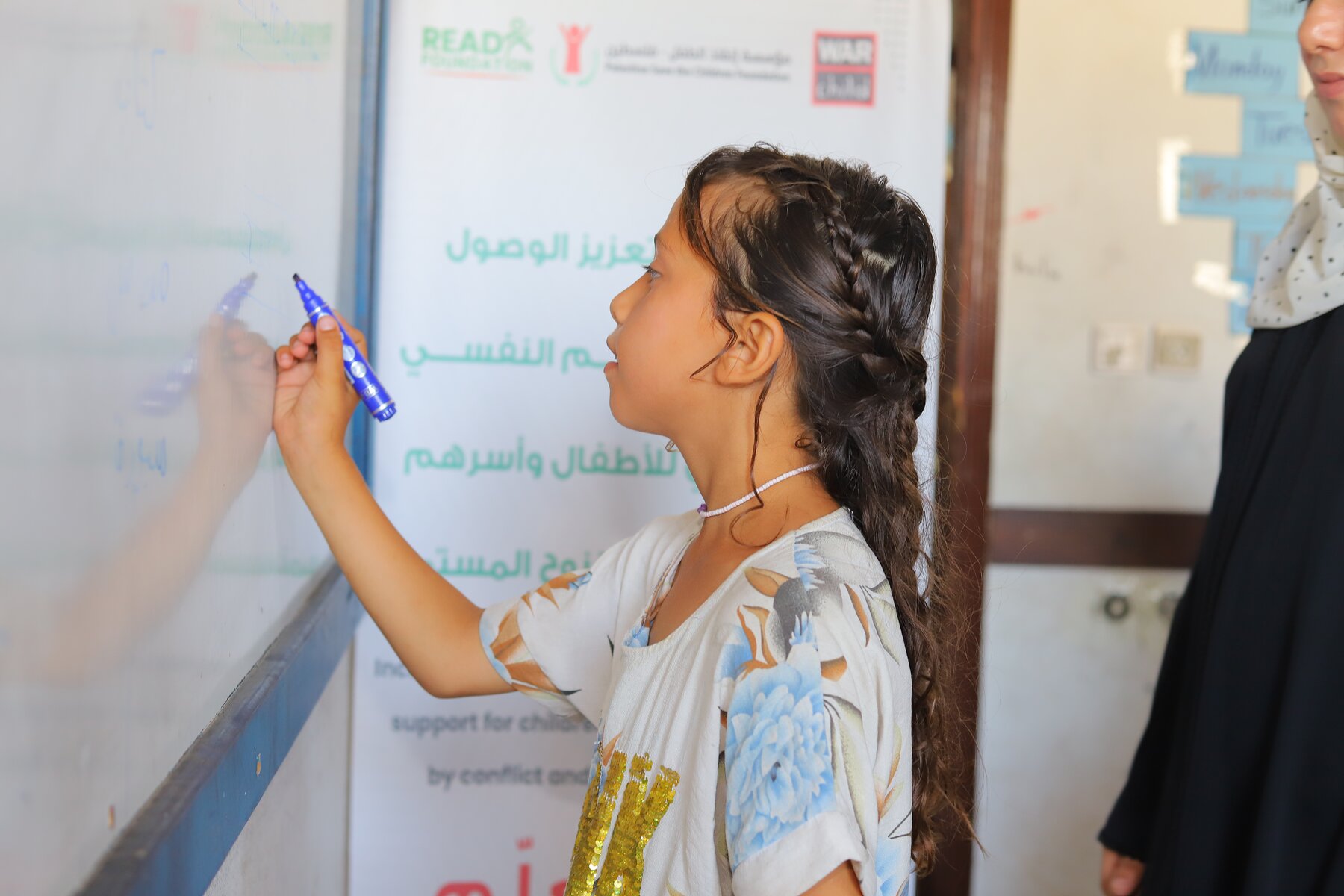
Months later, Shams’ mother saw a post on the social media page of Palestine Save the Children Foundation (PSCF), highlighting the educational and emotional support available to children through non-formal education classes and War Child’s TeamUp programme, an evidence-based methodolgy that uses play and movement to support children’s wellbeing. 
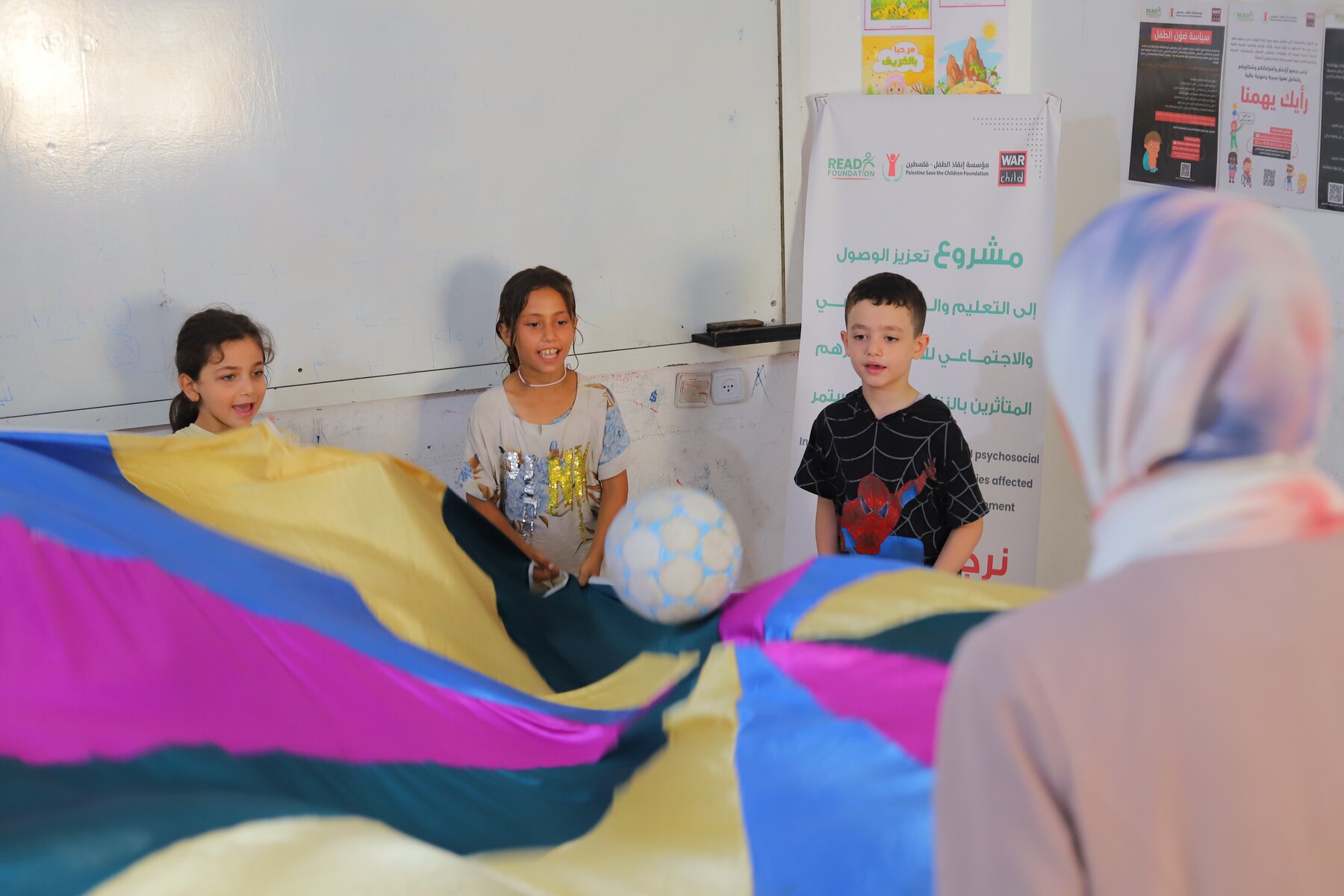
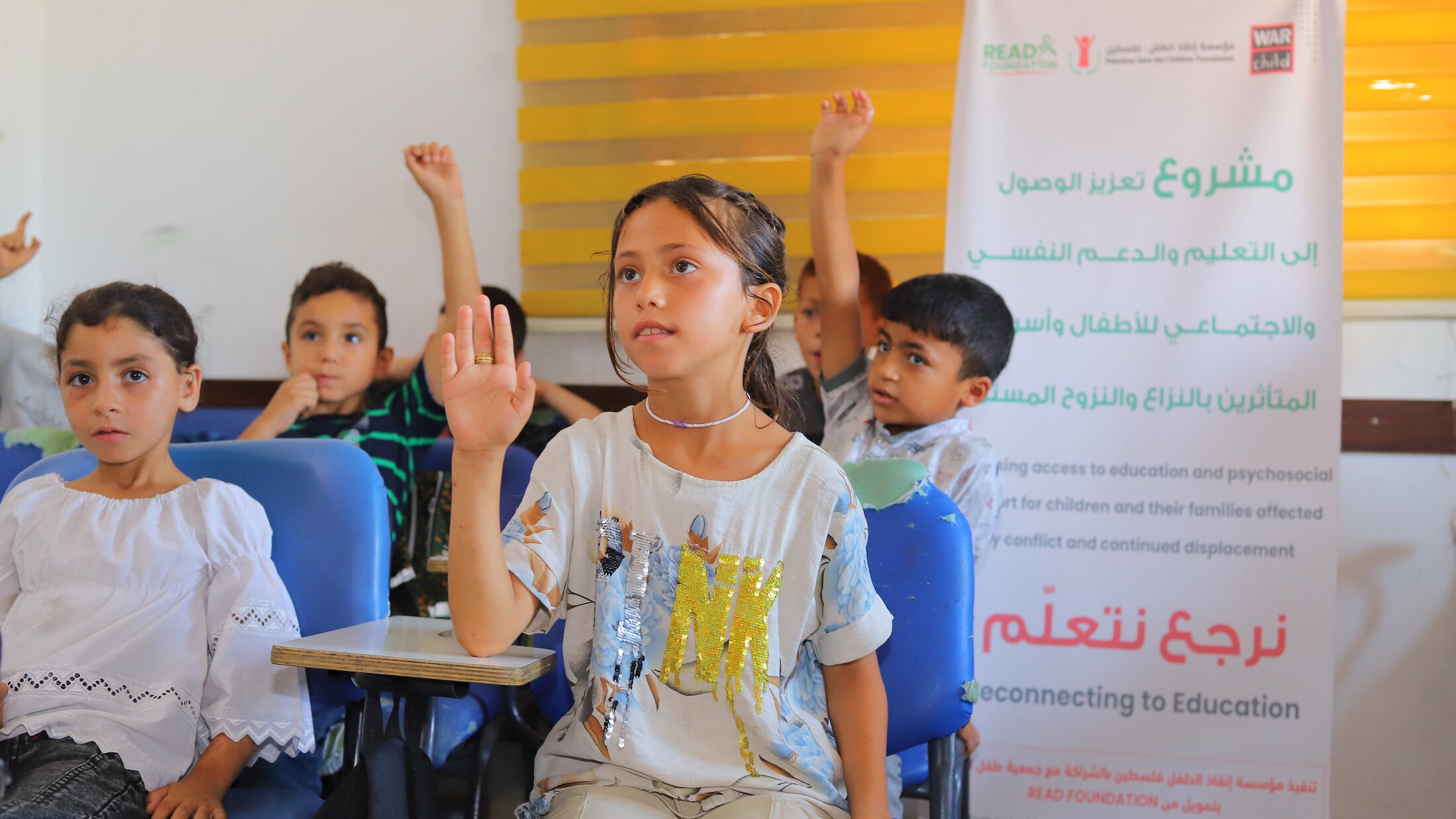
A few days later, Shams was enrolled in the project’s activities. Little Shams struggled with fear and hesitation at first. She felt anxious about traveling to the centre and meeting new children. Having become withdrawn, she tended to avoid socialising, but with time, she started becoming more encouraged to engage as teachers and facilitators helped her feel welcome. 

As the centre became a safe space for Shams, she started spending more time with peers and enjoying the simple moments of play and laughter. She clearly felt more confident expressing herself. “I love coming to the centre to play and laugh with my friends. I feel much happier doing activities with them, and I’m no longer afraid to express myself,” she says. Educational sessions also helped her gain knowledge and develop a positive attitude towards learning.

I learned to read stories on my own and count numbers during games. Now, I participate in class without being afraid of making mistakes.

Shams also described the centre as a warm embrace that protects her from frightening sounds and the difficult experiences of war. Her mother could tell the difference: “Since Shams enrolled, she has become more outgoing and confident and interacts more openly with others. The project team and teachers guided us on the best ways to support her at home, allowing us to work together as one for her sake. Best of all is seeing my daughter regain her smile and joy with her friends, and that alone means the world to us as a family.”

Eight-year-old Shams dreams of becoming a dentist in the future. She imagines herself helping children take care of their teeth and making visits to the dentist less frightening. Despite the displacement and loss she has endured, she continues to dream of a future in which she can help others. Even in the darkest circumstances, children can discover their potential and find reasons to look ahead with hope.

Shams’ story is a reminder that the impact of war extends far beyond losing a home. It affects children’s emotional and physical wellbeing, their sense of safety and ability to learn. While this project has helped 800 children reconnect with education and begin to regain hope, ongoing violence and destruction in Gaza continue to impose immense lasting hardships onto children and families’ lives, leaving them to cope with unimaginable loss and deeply painful experiences.

Related articles

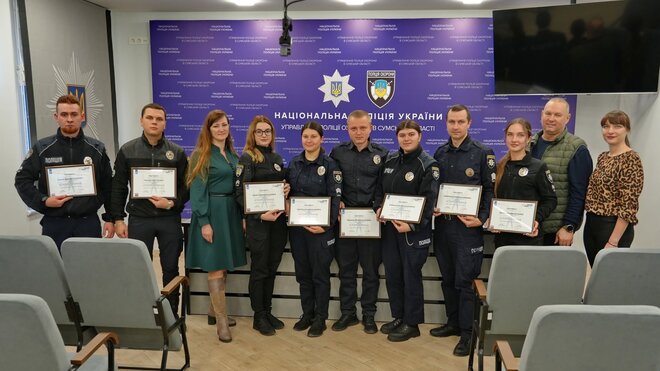
The Department of Security Police in Sumy Oblast receiving their certificates following the completion of the ReachNow training.
  • Mental health and psychosocial support

Beyond trauma: How the ReachNow tool is strengthening community-based early detection of mental health needs in Ukraine's schools

A school security officer noticed a boy who often cried at school. Before, he might have seen this behaviour as attention-seeking or disruptive. Instead, drawing on skills gained through training on War Child's ReachNow tool, he recognised that the child could be experiencing emotional distress and referred him for psychological support.