“At night he sleeps with his shoes on”: a displaced family of four on what war is doing to Lebanon’s children
March 23, 2026
They left home with almost nothing.
“We did not leave in a calm way,” Batoul said. “We left in minutes.”
Omar sits on a folded mattress near the window while his children move in and out of earshot.
He is trying to sound calm, but his voice keeps breaking. He speaks of the things his mind has not let go of: the medicine bag they had to leave behind, the keys he still carries in his pocket, the way the children froze when the evacuation order came.
“The order came, and then the calls started coming from neighbours and relatives: leave, leave now,” he says. “There was no time to discuss what to take. We locked the door and walked out.
That is the part that stays with me. We left as if we were stepping out for an hour. We did not know we were abandoning our life, for the second time in less than a year.”
Batoul cuts in. “Not even an hour,” she says. “Less than that. Like hundreds of thousands of others in Lebanon, the family has been pulled into a sudden cycle of fear, flight and uncertainty.”
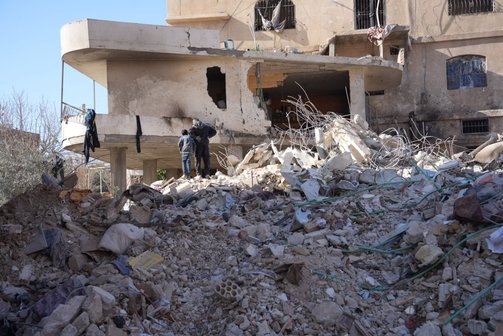
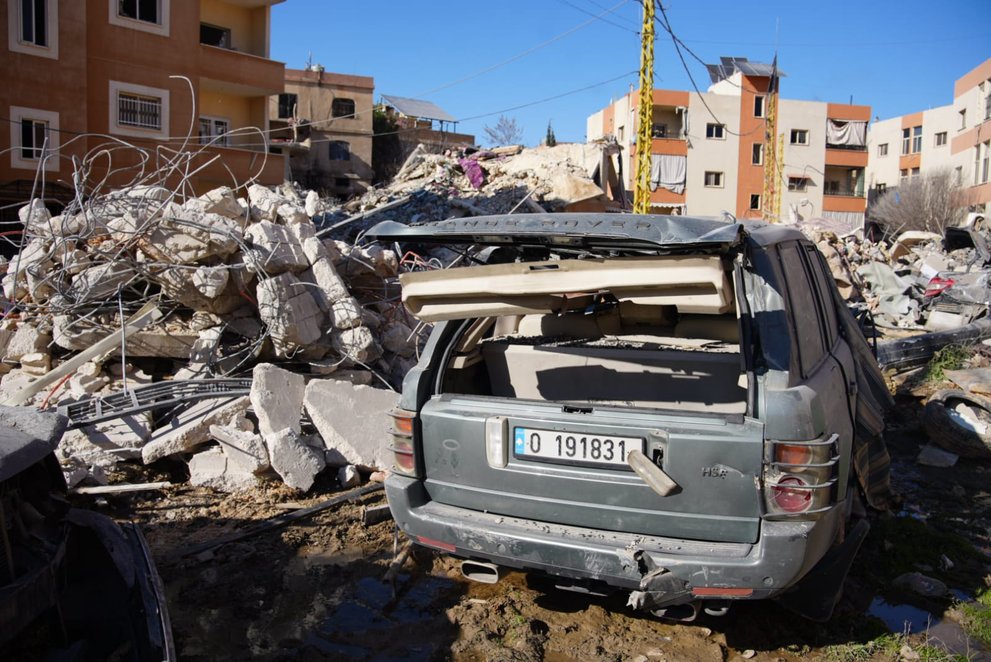
Since the escalation intensified, families have been fleeing South Lebanon, Beirut’s southern suburbs and other affected areas, with many ending up in collective shelters set up in schools and other public buildings. War Child warns that children remain the most affected. They are being killed and injured, forcibly taken out of classrooms, and exposed to repeated trauma and instability.
For this family, the immediate decision was survival. But it comes at a cost.
“My husband has cancer,” the mother says. “He was in treatment. Everything was organised around that. The appointments, the tests, the medicines, the transport. And then all of that stopped in one day because we were afraid, we would not be alive if we stayed.
“We left the treatment behind,” the husband says quietly. “That is the truth. When there are strikes and warnings and children in the house, you do not think first about the next session. You think first: can we get out safely?”
Karim has been listening from the edge of the mattress. He is 13. When we asked him what heremembers most clearly, he does not mention the journey itself. He mentions the moment before.
“My younger sister was crying because my mother was telling her to hurry, and she did not understand why everyone was shouting,” he says. “I knew something bad was happening because my parents were not talking normally. My father was trying to act calm, but he was not calm. He was speaking very fast. He was not his usual self.”
“I took my school bag,” he adds. “But there were no books inside. I just took it because I did not know what else to take.”
In the shelter, the family says, the hardest part is not only what they lost when they left, but what daily life has become for them since. They are sharing a room with a dozen other people. There is no privacy. Sleep has become a luxury. Water is limited.
“You stop feeling like a family,” the mother says. “You become four people trying not to disturb other people in a common space like this one.”
At night, she says, the children wake up often. Her daughter startles at loud noises. Karim sometimes does not always sleep at all..
“He sleeps in his clothes,” she says. “Sometimes with his shoes on.”
“I do not sleep deeply,” he says. “I feel like if something happens again, I need to be ready.”
Even here, in a place meant to be safe, he does not feel able to fully sleep.
Children in Lebanon are facing severe psychological stress as violence escalates, while schools converted into shelters are disrupting education for large numbers of students.
Omar says he sees the change in his son most in silence.
“Before, he used to argue about small things. Football, homework, going out to play with his friends.. You know, children stuff,” he says. “Now he sits and listens for the sound of strikes. He is still a child, but he is listening like an adult would listen when there is a problem in the house.
When asked what he thinks most about now, he answered without hesitation. “Whether we will go back. And if we do go back, what will still be there.”
Then, after a moment: “And school.”
That comes up more than once. His mother says he keeps asking whether classes will resume and whether he has already fallen behind.
The shelter is a school, but not for learning anymore. It is a place where children wait for something to change.
“I do not want to lose the year,” Karim says. “Everybody says there are bigger problems, but I do not want to lose the year.”
Omar nods. “Children need something to continue,” he says. “If there is no school, no routine, no privacy, no safe place to play, then every day becomes the same day.”
The family is observing Ramadan in the shelter. Each evening, they say, they receive one readyto-eat cold meal to break their fast. They are grateful for the support, but it is not enough.
“We are not saying you [humanitarian organisations] are doing nothing,” the mother says. “They are helping. We know that. But one cold meal for a family in these conditions is not enough, especially for our children.”
She gestures towards the room around us.
“You cannot cook here. You cannot store food. You cannot calm a child with promises when you yourself do not know what tomorrow will look like.
Her husband adds that access to drinking water is also a daily concern.
“Everything becomes more difficult when you’re displaced,” he says. “Drinking water, washing, taking medicine, finding a quiet corner for your child to rest. These things sound small when you say them one by one, but together they become your whole day.”
When I ask Karim, who is the last to speak, what he misses most, he says, “My room.”
“I want people to know that children understand more than adults sometimes,” he says. “Even when nobody explains everything, we understand enough and just like everyone else, we are afraid.”
Through local partners, War Child has been supporting families like Karim’s in shelters across Lebanon by providing meals, including in the Beirut and southern suburbs, North Lebanon and the Baalback-Bekaa Governorates.
Over the coming weeks, our response will be expanded to focus on education, child protection awareness and services, as well as mental health and psychosocial support; in continued close cooperation with our partners.
* names have been changed to protect identities