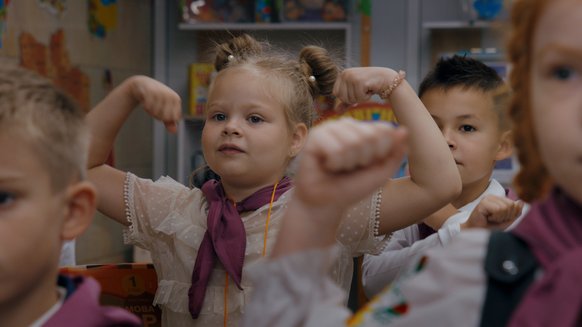
“I Dream of Quiet Nights Without Sirens”: Ukraine’s Children Call for Safety After Four Years of War
Feb. 24, 2026
Kyiv
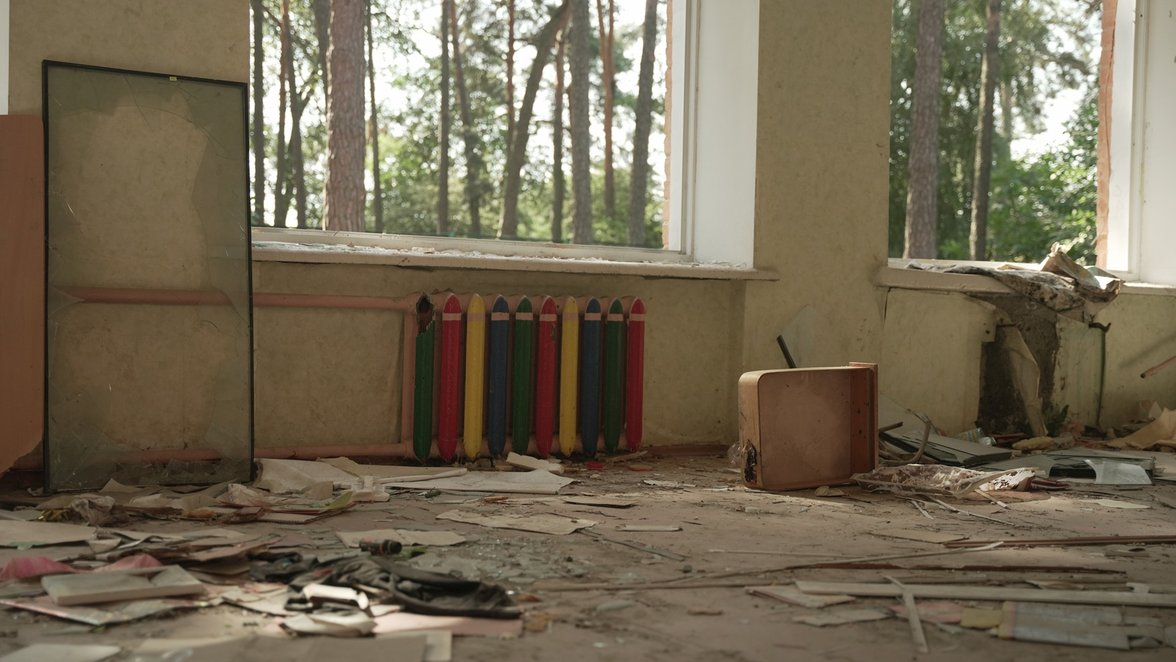
Four years after the latest Russian invasion in Ukraine, millions of children continue to grow up surrounded by fear, displacement, and uncertainty. Yet for many Ukrainian children, conflict has been a reality since 2014, when war first erupted in eastern Ukraine.
Today, approximately 2.4 million children in Ukraine are in need of humanitarian assistance. Years of war have disrupted every aspect of childhood, from education and safety to mental health and wellbeing. Many children have experienced repeated displacement, loss, and trauma, with no clear end in sight.
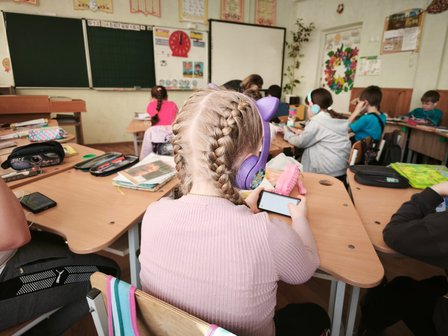
Education remains under severe threat. Towards the end of 2025, an estimated 1.6 million children face educational barriers due to displacement, facility damage, and insecurity. In-person learning has become increasingly difficult as attacks on energy infrastructure leave homes and schools without electricity, heating, or water - particularly during freezing winter months. For many children, school has shifted underground, doubling as a shelter during air raids.
“Studying ‘underground’ in constant anxiety is very difficult and exhausting,” says Viktoriya, 14. “You try to concentrate on your lessons, but there is only one question in your mind – is it safe right now?” Despite this, Viktoriya still dreams of travelling, going to university, and reuniting with relatives separated by war.
Across the country, 3.7 million people remain displaced, including 1.3 million children. Families live in a state of constant uncertainty, navigating daily life between sirens, shelters, and the struggle to meet basic needs. For children, this prolonged instability has forced an early loss of childhood.
“The war forced me to grow up earlier than I should have,” says Anna, 14. “We, Ukrainian children, are growing up faster because of fear, loss, and responsibility. The hardest thing is seeing what children should never have to see.”
This winter has been particularly devastating. Children and their families have endured days without heating, electricity, or water. Freezing temperatures have kept many children out of school, directly affecting their health, safety, and overall wellbeing. Families remain in survival mode, making impossible choices to keep children warm, fed, and safe.
For Rostyslav, 15, daily life often comes to a halt. “I want the war to stop. I want the constant shelling to end because when we go to the shelters, our entire lives feel like they come to a halt,” he says. Yet even amid hardship, Rostyslav dreams of helping rebuild his country. “After the war, I would go to help rebuild cities. I want to help people who have lost their homes because I know how hard it is to leave your home and have nowhere to return.”
Yaroslava Mozghova, War Child’s Head of Programmes in Ukraine said: “These children are not asking for anything extraordinary. They are asking for quiet nights, safe schools, and the chance to grow up without fear. Four years into the full-scale war, attacks on civilians and civilian infrastructure must not be allowed to become normalised. Protecting children is an obligation under international humanitarian law.”
States with influence must press for full respect of international humanitarian law, including the protection of civilians and civilian infrastructure. Attacks on energy systems, schools, and essential services must stop.
Children in Ukraine cannot wait for political solutions to catch up with the realities of war. Their protection must be treated as an immediate obligation, not a future aspiration. As another year of war begins, Ukraine’s children continue to dream of learning, rebuilding, and living without fear. Those dreams must be protected.
War Child has supported children affected by war since 2022, focusing on child protection, education, and mental health and psychosocial support. Since 2023, War Child has reached over 310,000 people through our partners, including more than 280,000 children. War Child currently operates across the regions of Donetsk, Kharkiv, Sumy, Kirovohrad, Lviv, Chervivtsi, and Khmelnitskiy in partnership with nine local partners.