Amplifying youth voices at the United Nations Children and Armed Conflict Conference
June 10, 2026
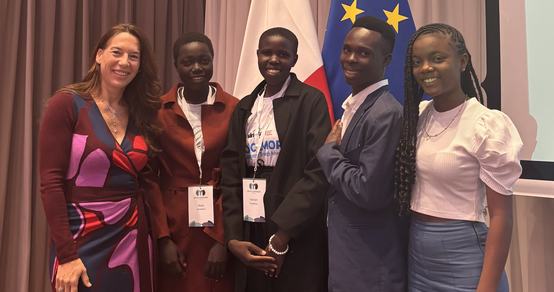
The conference, ‘A Critical Component of the Emerging Global Peace and Human Security Framework’ was hosted by the UN Special Representative to the Secretary General for Children and Armed Conflict, Vanessa Frazier, and the Government of Malta, to galvanise action around the Children and Armed Conflict (CAAC) agenda; the global framework designed to monitor, list and encourage preventative action to counter grave violations of children’s rights in conflict.
The youth representatives from Colombia and Uganda shared the feedback and recommendations of over 100 youth from the DRC, South Sudan, Uganda and Colombia. These recommendations were formed with their wider youth advocacy groups, as they debated and discussed what they felt should be adopted and changed within this area of the UN’s work.
The War Child delegation also read out a statement from VoiceMore Lebanon, who were unable to send a representative due to the ongoing violence and devastation in their country. Their absence was symbolised by an empty chair on the panel and was a poignant reminder of the real-time impact of conflict on young people today.
The youth representatives Harriet, Justus, Loren and Rose, made their VoiceMore recommendations clear; there must be meaningful participation of young people in the CAAC agenda and greater awareness of the agenda on the ground to increase its effectiveness at supporting the wellbeing of children and young people affected by conflict.
The youth advocates’ contributions were praised by attendees, with specific references to their work and made during statements by SRSG Vanessa Frazier, Former SRSG Virginia Gamber and representatives of the Governments of; Austria, Bahrain, Germany, Italy, Malta, Poland and Ukraine.
As one Member State representative said, the youth contributions highlighted “the importance of listening to those living with the effects of conflict”.
War Child believes that children and young people must play a direct role in shaping decisions that affect their daily lives and long-term opportunities. This includes their meaningful participation in high-level meetings so their voices and experiences can inform and shape international frameworks. Please read the VoiceMore recommendations below in full:
Member States must;
- Increase investment in community-level child protection through UN agencies and support awareness of child rights frameworks in conflict-affected areas.
- Support awareness of child rights frameworks in conflict-affected areas.
- Complement their responses to the six grave violations with actions that address the wider impacts we experience in our daily lives – understand Grave Violations holistically
All parties to the CAAC agenda must;
- Recognise direct and indirect harm. When Grave Violations happen to children, whole families, friendship groups, and communities are deeply affected. More attention and support needs to be given to children who are witnesses, related to victims, or friends with those children.
- Reflect on the fact that currently, in the Grave Violations, maiming refers to only physical harm. We believe maiming should include psychological harm and recognise the devasting impacts of Grave Violations on children’s mental health.
- Strengthen communication of CAAC findings in simple, accessible ways.
- Ensure (child rights and protection) information reaches affected communities.
- Work closely with youth to raise awareness.
- Support young people to engage in advocacy and information sharing.
One group from Uganda provided specific reflections on what kind of participation they wanted;
- Children should be included from the beginning, not at the end.
- Meetings should create space for young people to speak.
- Use simple language so children understand.
- Go where children are - schools, communities.
- Adults must not just listen, but act.
- Youth should have access to feedback: tell us what happened after we speak.
- Include young people in follow-up decisions.
- Give responsibility to young people, not just a voice.
- Young people must be involved in decision-making, not just speaking.
- Participation should happen at all stages planning, discussion, action.
- Respect children’s ideas like you respect adults.
War Child is grateful for the important role played by our partners Similar Ground, represented by Patrick Kumi, and HAF Uganda, represented by Mariam Nazziwa, for their work in organising VoiceMore sessions and the meaningful participation of youth advocates. Thank you to the Dutch Ministry of Foreign Affairs for supporting the VoiceMore project in Uganda.
VoiceMore is War Child's youth-led advocacy programme, empowering young people affected by armed conflict to share their experiences and drive change. VoiceMore groups identify the challenges facing children and youth in their communities, design their own advocacy projects, and War Child amplifies their voices to international decision-makers.