War Child brings child and youth voices to the 61st UN Human Rights Council
March 19, 2026
Geneva, Switzerland
A side event built around children's leadership
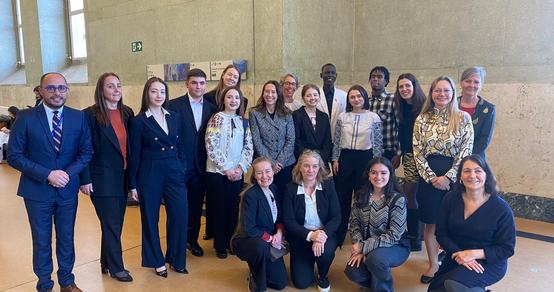
At the 61st session of the UN Human Rights Council, War Child Alliance co-organised a side event on child and youth-led advocacy on the future Crimes Against Humanity Treaty, alongside Terre des Hommes and Malta's Permanent Mission to the United Nations.
The event brought together young advocates from Albania, Colombia, and Ukraine, joined by the lead of a Ugandan CAH youth advocacy project. Together, they represent five groups of children and young people who have been actively engaged in advocacy for a stronger child rights perspective in the future treaty, not as observers, but as advocates who have consulted peers, conducted research, and developed concrete recommendations for States.
The message they delivered was unified, evidence-based, and urgent.
What children are asking for
Across all delegations, children and young people arrived with a shared set of priorities to include in the future Treaty. In brief, they are calling on Member States to:
- Explicitly name and define children throughout the treaty, including in the Preamble. The treaty must define a child as any person under 18 and ensure age-appropriate protections apply throughout.
- Recognise age as a ground for persecution. Children are often targeted precisely because they are children; more easily manipulated, more deeply harmed, and more dependent on adults for protection. Age shapes both how crimes are committed and their long-term impact.
- Guarantee safe and meaningful participation of child victims and witnesses in justice processes. Justice systems must adapt to children; not the reverse. Participation must be safe, inclusive, age-appropriate, and free from the risk of revictimisation.
- Treat children associated with armed groups as victims, not perpetrators. Children who are recruited, coerced, or forced into armed groups deserve rehabilitation, education, and reintegration; not punishment.
- Prohibit all forms of child slavery and exploitation, including forced labour, forced marriage, sexual exploitation, and denial of education and basic services.
- Establish child-specific justice systems that prioritise rehabilitation and reintegration for children who commit violations, recognising that children are not adults and must not be treated as such.
War Child position
War Child Alliance stands firmly behind these recommendations. The CAH Treaty is a critical accountability gap: today, there is no standalone international legal instrument obligating States to prevent and punish crimes against humanity. Conflict-affected children, already among the most vulnerable groups, deserve better than invisibility in the frameworks meant to protect them.
Recognition of specific vulnerabilities and needs of children in the treaty is not symbolic. It is foundational to prevention, accountability, and the realisation of children's rights in the most extreme contexts of violence.
Children and young people from Colombia, Uganda, Ukraine, and Albania have done the work. They have consulted peers, built evidence, and brought their voices directly to the people negotiating this treaty. Now Member States must honour that courage with action, before the 30 April 2026 deadline closes the window.
Read the full priorities document
Want to know in detail what children and young people are asking for? Download the full Child and Youth Priorities for the Future Crimes Against Humanity Treaty document below developed by young advocates from Colombia, Uganda, Ukraine, and Albania from their own lived realities.
Children have spoken. Now it is time for Member States to act.
Download the report here
From their lived realities to the international arena: what children said
From Ukraine, young people from Trostyanets, a community in the Sumy region close to the front line, spoke of childhoods defined by air raid sirens, displacement, anxiety, and lives feeling "on pause." But they also spoke of action. Through the VoiceMore initiative, supported by War Child and the Ukrainian Step by Step Foundation, ten young people from their community have been conducting peer research, organising mental health activities, and influencing local youth policies.
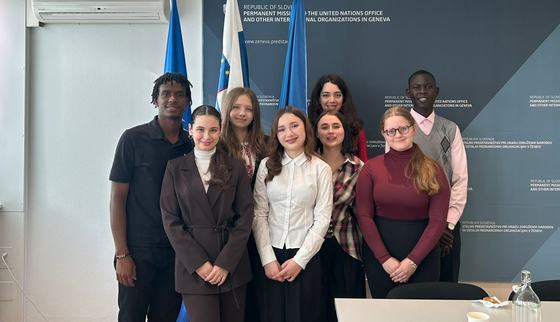
Youth advocates from Ukraine, Colombia, Uganda and Albania meeting in Geneva
Dariia, speaking at the annual full-day discussion on the rights of the child of the Human Rights Council, called on Member States to invest in long-term psychosocial support, integrate trauma-informed care into education, and ensure that Ukrainian children abroad are protected from discrimination and supported in host communities.
From Colombia, Santiago (fictional name), a young Afro-descendant advocate from Buenaventura representing the Colombian Pacific region, took the floor on behalf of 12 young people who have led a consultation and advocacy process around the treaty. He came with three concrete proposals, developed through a process of training, peer consultation, and validation with children and young people from across Colombia.
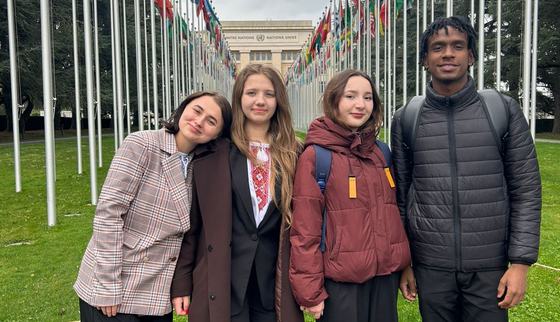
Some of the youth advocates posing in front of the alley of flags of the Palais des Nations in Geneva
From Uganda, children and young people from refugee and host communities, some from South Sudan, Uganda, and the Democratic Republic of Congo, brought the weight of direct experience to their statement. Having lived through conflict, displacement, and loss, they spoke with clarity and moral authority about what the treaty must deliver.
Their asks reflected the same priorities voiced by their peers from Colombia and Ukraine: name and define children in the treaty; treat children associated with armed groups as victims deserving rehabilitation and a second chance, not punishment; and explicitly prohibit all forms of child slavery and exploitation: forced labour, forced marriage, sexual exploitation, and denial of education.
They closed with a message that cut to the heart of the entire advocacy effort: