Skip to content

War Child Alliance statement in reaction to the proposed cuts to the EU’s external action instrument in the next long-term budget

27 Nov 2026

WCA welcomes the ambitious proposal to allocate €25 billion to humanitarian aid under the next EU Multiannual Financial Framework (MFF 2028-2034). It is essential to maintain this level of funding throughout the ongoing budget negotiations, in light of increasing humanitarian needs and declining global humanitarian funding.

However, WCA expresses deep concern over the significant proposed reduction in the overall allocation for the Global Europe Instrument, as reflected in the new Negotiating Box issued by the President of the European Council on 21 November. Humanitarian, development and peace interventions are interconnected and mutually reinforcing, playing a critical role in addressing the root causes of crises, reducing humanitarian needs and strengthening the resilience of communities.

WCA's recent report, Childhoods on the Frontline, highlights the growing body of evidence on the detrimental and long-term impacts of unmet needs arising from conflict and crisis on children, their caregivers and the wider communities. WCA stresses that every child, regardless of their circumstances or the context in which they live, must have equal access to quality education, essential services and protection, and that their rights and well-being must be upheld without exception.

As negotiations on the EU’s long-term budget reach their final and critical stage, the WCA calls on the EU Member States, the European Parliament and the European Commission to safeguard and strengthen the EU’s capacity to deliver credible, effective and reliable external action, at a time of growing geopolitical confrontation, instability, declining accountability and erosion of international norms.

WCA therefore urges the EU not to compromise on the resources needed to fulfil the EU's global commitments and calls for the reinstatement of the initial proposed allocation of €200 billion for the Global Europe Instrument. At a minimum, the EU should ensure that any reductions to the external action are proportionate to the cuts proposed under other headings of the next long-term budget.

Protecting the humanitarian budget while weakening funding for development and peace is not a sustainable approach to supporting children affected by conflict. The EU must preserve its capacity not only to respond when children are in crisis, but also to invest in their long-term wellbeing, resilience and peaceful futures.
Related articles

War Child and Plan International expand TeamUp’s psychosocial support for children in Ethiopia
  • Mental health and psychosocial support

War Child and Plan International expand TeamUp’s psychosocial support for children in Ethiopia

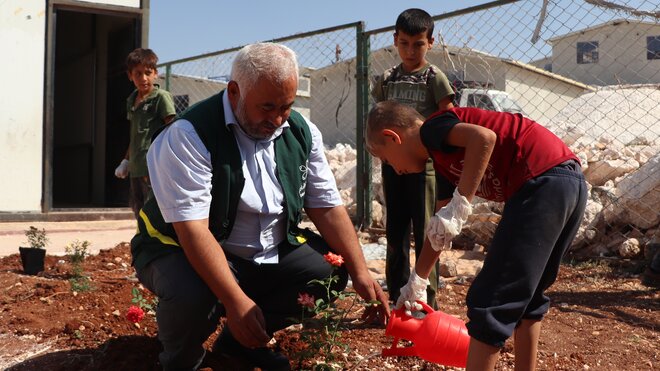
Children affected by conflict and displacement need more than safety and basic services. They have the right to opportunities to play, connect with others, express themselves, and regain a sense of belonging. To help meet these needs in Ethiopia, War Child is working with partner Plan International Ethiopia and a wider network of organisations and institutions to expand the delivery of TeamUp, a psychosocial support methodology developed and owned by War Child and Save the Children.

No recovery without children: understanding children's needs in northern Syria

No recovery without children: understanding children's needs in northern Syria

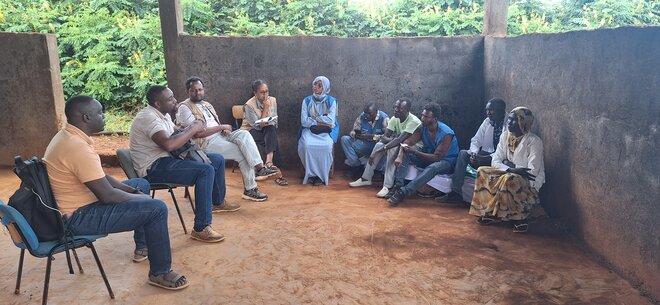
After more than 14 years of conflict, Syria remains one of the world’s largest and most complex humanitarian crises. Recognising the need for up-to-date, evidence-based information, War Child, in partnership with Bahar and the Humanitarian Relief Association (IYD), conducted a child-focused needs assessment across Aleppo, Idlib, Ar-Raqqa, Al Hasakeh, and Deir Ezzor. The assessment provides an updated understanding of the needs, vulnerabilities, and priorities of children and their caregivers among host communities, internally displaced persons (IDPs), and returnees.

Shams’ story: Rays of light amid war
  • Education
  • Mental health and psychosocial support

Shams’ story: Rays of light amid war

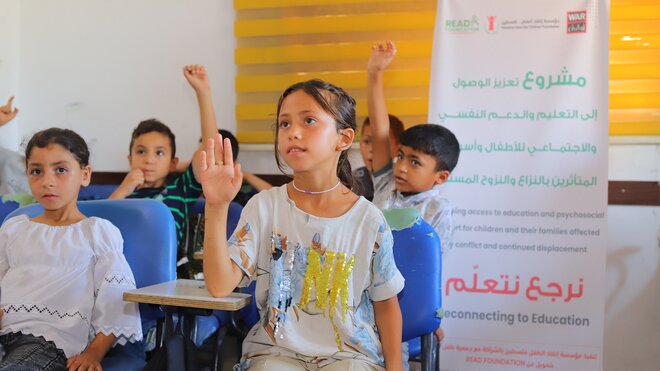
In October 2025, a “ceasefire” was announced in Gaza, but hostilities continued. Since then, more than 300 children have been killed over 300 days – an average of one child killed every day. For three years, fear, loss and repeated displacement have shaped childhood across Gaza. For eight-year-old Shams, some of her darkest memories began in May 2024, when Israeli forces’ operations intensified in the middle area of the Strip.