

Ukrainian youth to world leaders: We are living this war, now listen to us
Youth in Ukraine release their research findings on mental health and they have demands.
Our Research and Development department ensures that every methodology that we create and deliver with our partners is rigorously tested, scalable, and grounded in evidence. Because meaningful impact for children requires proven solutions.
Children growing up in conflict face complex challenges, from emotional distress and interrupted education to heightened protection risks. At the same time, the humanitarian sector is under increasing pressure to do more with less.
Since 2016, War Child’s Research and Development Department has helped us design, test and improve our work. We work with academic institutions, partners and communities to combine research with practical experience to ensure our work delivers real results for children.
Our team of over 30 researchers, led by Professor Mark Jordans (University of Amsterdam and King’s College London), is one of the largest NGO research teams focused on children affected by conflict.
We publish our findings in peer-reviewed journals and share them across the humanitarian sector, helping build the global evidence base for mental health and psychosocial support, education in emergencies, and child protection.
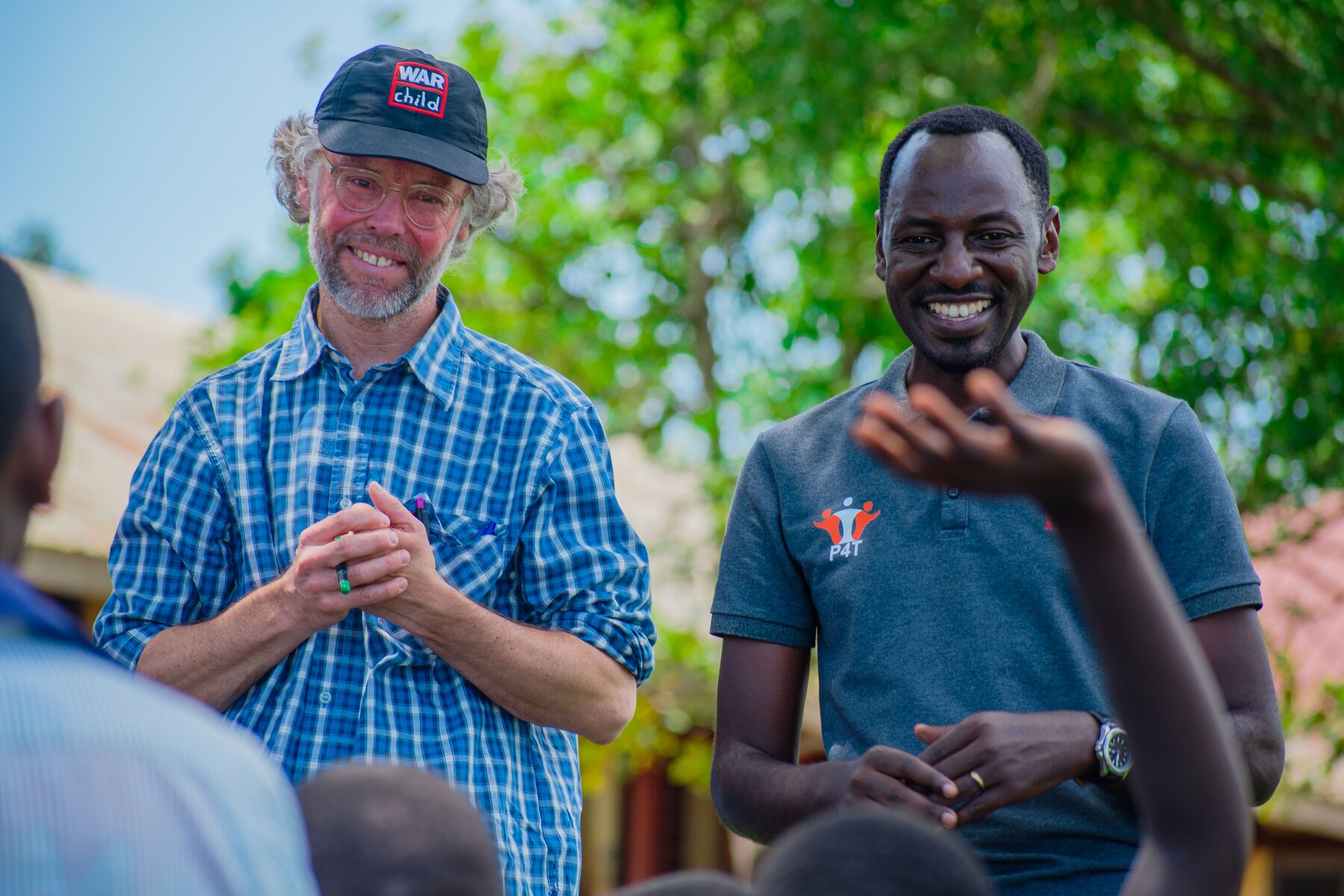
Director of Research and Development, Mark Jordans meeting with War Child partner Planning for Tomorrow (P4T) in Uganda.
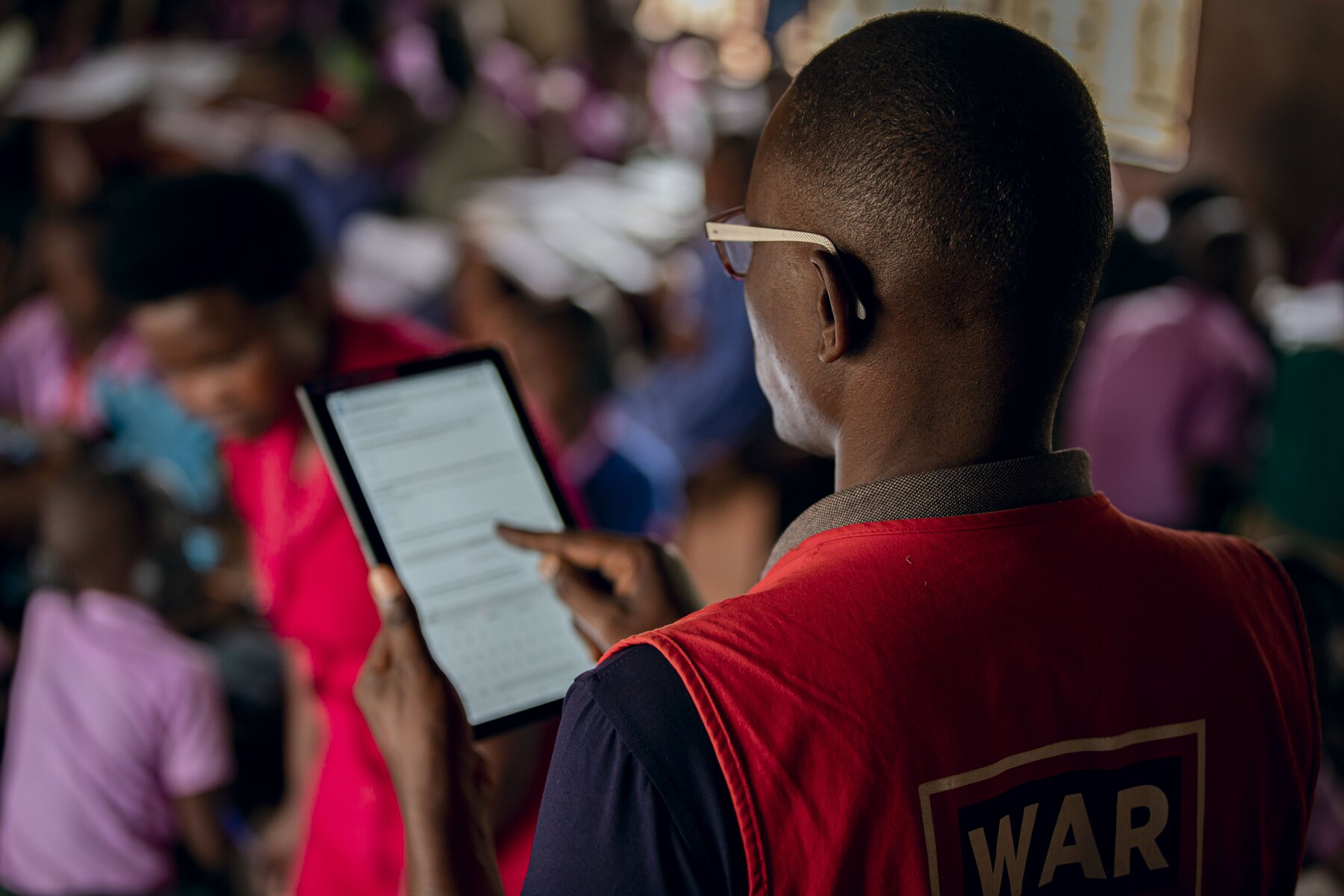
Our research underpins the War Child Care System, our toolkit of evidence-based methodologies that combine mental health and psychosocial support, education, and child protection to meet the integrated needs of children and communities affected by conflict.
To ensure these methodologies are effective, we follow a structured research process: from formative research and co-design with partners, to feasibility testing and rigorous evaluation.
We use internationally recognised research methods, including Randomised Controlled Trials, alongside implementation and qualitative research to understand why and how our methods are effective in different contexts.
A research-grounded methodology is an approach that was developed based on formative research but has not yet been tested for effectiveness.
An evidence-based methodology is an approach that has shown positive outcomes following at least one large-scale controlled effectiveness study.
An evidence-informed methodology is an approach that has shown promising outcomes following a feasibility study.
We work with partners to bring and adapt evidence-based methodologies to more children and communities while maintaining quality and building on what the evidence tells us.
Our approach to combining research with practical experience has earned international recognition.

War Child awarded the Klaus J. Jacobs Best Practice Prize for excellence in bridging science and practice.
War Child awarded the Laureus Sport for Good Award for our TeamUp methodology
War Child awarded the Yidan Prize for Education Development for Can’t Wait To Learn methodology.
Youth in Ukraine release their research findings on mental health and they have demands.

The aim of this mixed-methods study is to evaluate the effectiveness of a community-led child protection approach (Seeds) in La Guajira, Colombia.

This study investigates machine learning predictors using students’ logs during their first few hours of usage to provide useful predictive insight into those students’ end-of-school year external assessment.
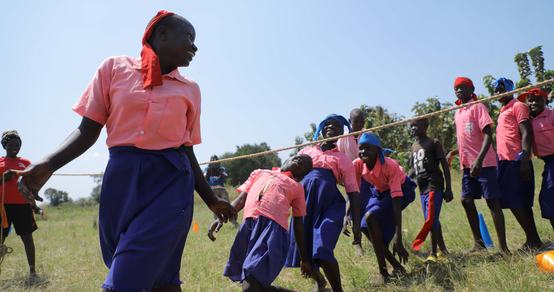
There is limited evidence for the effectiveness of mental health promotion interventions in low- and middle-income settings, especially for longer-term benefits. This study evaluates the 5-month follow-up outcomes of a movement-based mental health promotion intervention (TeamUp) for refugee children in Northern Uganda (West Nile) and further investigates what explains longer-term benefits.
The authors reply responding to comments and concerns relating to evaluating the effectiveness of the Community Case Detection Tool (CCDT) to promote mental health help-seeking among children in refugee settlements across Uganda
Support to improve teacher wellbeing is scarce in almost all contexts, but especially so in low- and middle-income settings in which teachers face both professional and personal challenges (Kirk and Winthrop 2007; Mendenhall, Gomez, and Varni 2018). This field note discusses the development of Coaching-Observing-Reflecting-Engaging (CORE) for Teachers, an intervention that focuses on improving teachers’ wellbeing.
