Jordan
Located at the heart of a region marked by conflict, Jordan has become home to many refugees fleeing crises in neighbouring countries, nearly half of whom are children. War Child works with partners across Jordan to provide refugee and host community children with education, mental health and psychosocial support, and child protection services.

The situation for children
Conflict and instability in Iraq, Syria, Yemen, Somalia, Sudan and the occupied Palestinian territory have driven thousands of people to seek long-term refuge in Jordan, placing significant pressure on the country’s resources, infrastructure and economy. This increase not only impacts the lives of refugee children but also affects opportunities for host communities.
Vulnerable children in Jordan, including refugee children, face heightened risks of exploitation, violence, abuse, neglect and psychological trauma, as well as barriers accessing quality education.
Our work in Jordan
War Child has been present in Jordan since 2013. We work through a hybrid delivery model, implementing programmes directly as well as through our partners to provide refugee and host community children with integrated child protection, education support, and mental health and psychosocial support services.
Evidence-based Methodologies used in Jordan

Play and movement-based psychosocial support
- Evidence-based
- Mental health and psychosocial support

Strengthening parent wellbeing and skills
- Evidence-based
- Mental health and psychosocial support

Closing the learning gap
- Evidence-based
- Education
Latest news from Jordan

- Mental health and psychosocial support
A family-systemic intervention for mental health with refugees in Jordan: Protocol of a randomised controlled trial of StrongerTogether
Forced displacement heightens mental health risks for children, including psychological, environmental and economic stressors, yet few interventions address whole-family needs within humanitarian contexts.

- Mental health and psychosocial support
Predictors of caregiver support intervention outcomes for refugees in Jordan: a three-path mediational study
More evidence is needed for understanding how evidence-based psychological interventions work, especially when implemented by briefly trained non-professionals in low- and middle-income settings.

- Education
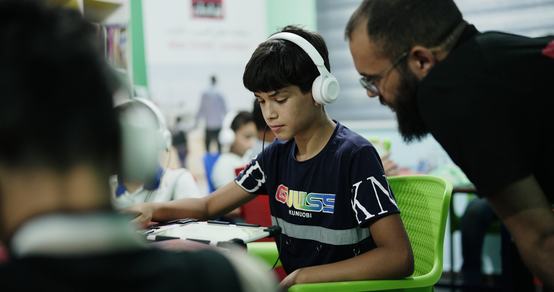
Can’t Wait to Learn levels up in Jordan: supporting more children to learn through personalised learning
Can’t Wait to Learn in Jordan is scaling up its impact and bringing its innovative game-based learning approach to more children through a newly upgraded digital experience and strengthened national partnerships.

- Mental health and psychosocial support
The development of a World Health Organization transdiagnostic chatbot intervention for distressed adolescents and young adults
Common mental disorders are prevalent in young people in low- and middle-income countries (LMICs). Digitally delivered interventions have the potential to overcome many structural and psychosocial barriers to mental health care.

- Mental health and psychosocial support
Nurturing families: A feasibility randomised controlled trial of a whole-family intervention with vulnerable families in Jordan
Armed conflict and forced displacement can significantly strain nurturing family environments, which are essential for child well-being. Yet, limited evidence exists on the effectiveness of family-systemic interventions in these contexts. This study conducted a two-arm, single-masked, feasibility Randomised Controlled Trial (fRCT) of a whole-family intervention with Syrian, Iraqi and Jordanian families in Jordan.
- Education
Hussein Al-Amoudi Breaks Down The Development Process of EdTech
What goes into developing an EdTech tool for children living in the midst of conflict? How does the context affect the product and what are the pitfalls to avoid along the way? Hussein Al-Amoudi, War Child Programme Manager based in Amman, Jordan sheds light on the journey that shaped Gobee, our prototype digital assessment tool.