
TeamUp
Children are extremely resilient - but they need the chance to process their experiences. Developed in 2015, TeamUp is a non-verbal movement-based methodology proven to increase children’s psychosocial wellbeing, enhance health and reduce traumatic stress.

Meet Felix Odera, TeamUp Global Partnerships Coordinator from South Sudan. Once affected by conflict himself, Felix joined TeamUp as a facilitator – a journey that helped him heal, support others, and eventually become part of the global team.
Why
Invisible wounds of war
Not all wounds caused by conflict are visible. For children, living through violence, displacement and uncertainty can have a lasting impact on their mental health and wellbeing. They may become fearful, withdrawn or constantly on edge. Others may struggle to feel safe, manage their emotions, connect with others or feel hopeful about the future.
The effects of prolonged stress can also impact children’s emotional, physical and cognitive development, and can continue long after a crisis has passed.
Yet during conflict, the safe spaces children need to play, learn, connect and simply be children are often among the first things to disappear.
Creating safe, supportive environments can make a difference. Play and movement, predictable routines, positive experiences with peers and trusted, supportive adults can all help children feel safe, build resilience and strengthen their wellbeing. These experiences can help children cope with adversity and reduce the longer-term impact of chronic stress.
Research shows that TeamUp improves children’s wellbeing
Burundi, 2024
A randomised control trial across 36 schools, involving more than 2,000 children and caregivers, found that TeamUp significantly improved children’s psychosocial wellbeing. The strongest and most lasting benefits were seen in children who took part in 24 sessions, with improvements still evident six months after the programme ended. Findings are currently under peer review.
Uganda, 2021
A study across 4 schools, involving more than 500 children, found that children who took part in TeamUp had improved psychological and emotional wellbeing, a more positive attitude towards school, and lower levels of traumatic stress compared with children in the control group.
Netherlands, 2019
An evaluation with children living in asylum seeker centres found that TeamUp was associated with positive psychosocial outcomes and perceived improvements in children’s wellbeing.
Making a positive impact
Where TeamUp is used
33 countries
TeamUp is being delivered by War Child and partners, and used by other organisations,in Bangladesh, Burundi, Central African Republic, Chad, Colombia, Democratic Republic of Congo, Ecuador, Egypt, Ethiopia, Germany, Greece, Lithuania, Lebanon, Jordan, Mali, Morocco, Mozambique, the Netherlands, Nigeria, the Occupied Palestinian Territory, Poland, Romania, Rwanda, Senegal, Somalia, South Sudan, Sri Lanka, Sudan, Sweden, Syria, Togo, Uganda and Ukraine.
Where TeamUp is used

Colombia's armed conflict has spanned more than five decades and continues to have a profound impact on rural, Indigenous and Afro-Colombian…

Children in the Central African Republic (CAR) face risks including recruitment and exploitation, family separation, early marriage, other forms of…

War Child works with local partners in eastern Democratic Republic of Congo to provide children affected by conflict and displacement with integrated…

Located at the heart of a region marked by conflict, Jordan has become home to many refugees fleeing crises in neighbouring countries, nearly half of…

The latest conflict between Lebanon and Israel escalated in 2024 and the situation has been unstable ever since. Children and vulnerable communities…

Children in South Sudan are facing one of the most severe humanitarian crises in the world, with many at risk of displacement, malnutrition, violence,…

Children in Sudan are currently living through the largest displacement crisis in the world. Forced from their homes, they face risks of violence,…
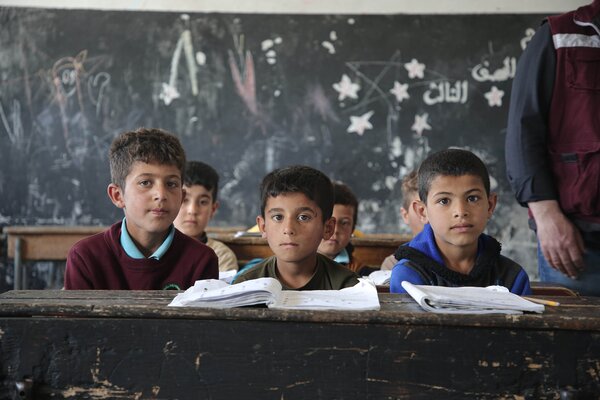
Children in Syria have endured over 14 years of armed conflict. Ongoing violence as well as devastating earthquakes have left millions of Syrian…

Uganda hosts Africa’s largest refugee population and has one of the world’s youngest populations. While the country has made significant progress…

Russia’s war in Ukraine has become a protracted humanitarian crisis, leaving millions of children in urgent need of assistance. War Child works with…

Children in the occupied Palestinian territory (oPt) have lived under Israeli military occupation for more than five decades, the longest ongoing…
Latest news from TeamUp

Process evaluation of TeamUp: a movement-based psychosocial intervention for refugee children in the Netherlands
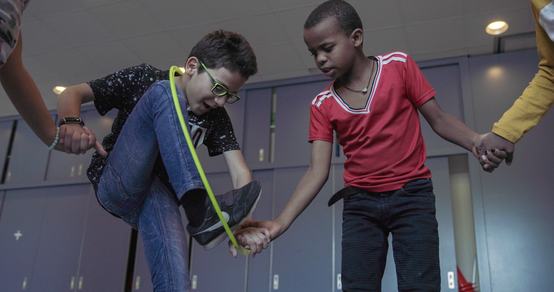
Nearly 60,000 people applied for asylum in the Netherland in 2015, confronting the governmental structures and services with great administrative, logistical and service provision challenges. Refugee children’s psychosocial needs and wellbeing are often overlooked, and post-migration support is of pivotal importance. An easy accessible movement–based psychosocial intervention, called TeamUp, was developed for children aged 6–17 living in refugee reception centres. A mixed-method process evaluation was conducted of (1) implementation process, (2) implementation quality, and (3) perceptions on implementation and outcomes. The intervention was positively perceived by all stakeholders and was found to have a positive impact on children’s psychosocial learning and wellbeing.
- Education
- Mental health and psychosocial support
Play and movement – key to better school performance for refugee children
Children new to The Netherlands perform markedly better at school if their social-emotional well-being is given priority, a new evaluation report has found. The report, a collaboration between War Child, Save the Children and UNICEF Netherlands, looks at how TeamUp activities improve children’s well-being. The organisations consider it important that more attention is paid to socio-emotional learning within newcomer education.

- Mental health and psychosocial support
TeamUp Shortlisted for Prestigious Laureus World Sports Award
TeamUp, a play and movement-based intervention by War Child, Save the Children and UNICEF Netherlands, has been shortlisted for the 2023 Laureus Sport for Good Award. The prestigious award celebrates social initiatives which have made a significant contribution to transforming the lives of children and youth through sport.

- Mental health and psychosocial support
Movement-Based Intervention Wins Laureus Sport for Good Award
Who would’ve thought that War Child would share the stage with all-time sporting greats like Lionel Messi and Shelly-Ann Fraser-Pryce? Yet, as we pick up the prestigious Laureus Sport for Good Award, it will be all eyes on TeamUp - our flagship psychosocial support intervention for children affected by conflict…

- Education
- Mental health and psychosocial support
Meeting Urgent Needs of Kids and Families in War-Torn Ukraine: A Story of Hope and Healing
Since the war began in Ukraine in 2022, millions of children's lives have been upended. In response, War Child has partnered with the All-Ukrainian Foundation for Children's Rights and Montessori UA, supported by UN OCHA's Humanitarian Fund.

Three Years On: How War Child's support to Ukrainians continues amidst the chaos of war
Today, Monday 24 February 2025, marks three years since Russia’s deadly war in Ukraine began. To this day, the violence continues, with three million children still requiring urgent humanitarian aid.
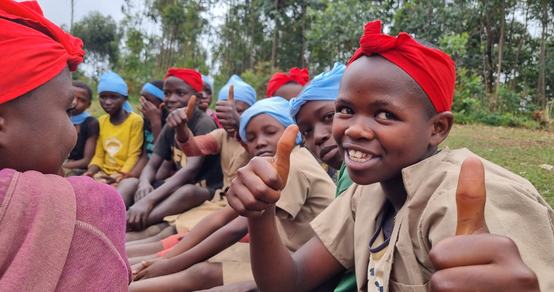
Strengthening Local Partnerships: A New Phase for War Child in Burundi
After almost 15 years in Burundi, War Child is embracing change: reducing its physical presence in Burundi and supporting locally-led programming through technical collaboration.

Two Years On – War Child and partners’ response to the earthquakes in Syria
Two years after the devastating earthquakes on 6 February 2023, War Child and partners have supported over 125,000 people in northwest Syria.

- Child protection
- Mental health and psychosocial support
World Refugee Day 2025: Protecting children in East Africa
Each year on 20 June, the world recognises World Refugee Day. This annual event serves as a powerful reminder of the millions of lives uprooted by violence, families forced to flee with nothing, and children robbed of safety and certainty. It’s also a moment to honour their strength, resilience, and their right to seek protection.

- Mental health and psychosocial support
Proven to work: TeamUp supports children to heal through movement
Across the globe, millions of children are growing up in the midst of conflict. War and displacement leave lasting scars—especially on young minds. Yet mental health and psychosocial support for children in crisis settings remains severely underfunded and overlooked.

- Mental health and psychosocial support
TeamUp in Uganda: Restoring childhood and building resilience through movement and play
Since 2017, War Child has been implementing the TeamUp methodology to help children in Uganda—the largest refugee-hosting country in Africa—to cope with stress, heal from trauma, grow, and reconnect with their childhood.

- Mental health and psychosocial support
Play. Connect. Thrive: War Child, Supported by the LEGO Foundation, Launches New Initiative to Revolutionise Partnerships and Reach More Children Affected by Conflict
War Child is taking major steps forward with how it scales effective support for children in conflict thanks to a new iniaitiave supported by the LEGO Foundation and implemented in collaboration with Save the Children Nederland.

- Mental health and psychosocial support
War Child’s care system in practice: Integrating holistic mental health methodologies to support children in Sri Lanka
The mental health needs of children are deeply complex and multi-layered—especially in contexts like Sri Lanka, where many, particularly adolescent girls, live with the silent burden of emotional and psychological trauma. Countless children face abuse, neglect, loss, and isolation. Stigma, systemic failures, and a scarcity of accessible services leave emotional wounds unaddressed.

- Mental health and psychosocial support
Recovery efforts in Sri Lanka: TeamUp’s role in strengthening children’s wellbeing after Cyclone Ditwah
Cyclone Ditwah has caused the worst flooding and landslides Sri Lanka has seen in decades, destroying over 86,000 homes and taking more than 630 lives. Nearly 70,000 people, many of them children, are living in temporary shelters, including schools converted into emergency accommodation.

- Mental health and psychosocial support
Strengthening TeamUp through data: the partnership between War Child and Pipple
Every child has the right to safety, education and psychosocial support. Especially in times of war. War Child supports children affected by armed conflict to cope with its impact, with one clear goal: to take the war out of a child. So, there is once again space to laugh, play and catch their breath. To make this impact truly visible, War Child is working with Pipple on a smart, data-driven solution: the Attendance App.

- Mental health and psychosocial support
Space to breathe – TeamUp and BeThere in Democratic Republic of Congo
In the Masisi Territory located in the North Kivu province of the Democratic Republic of the Congo, children and caregivers traumatised by violence and displacement are learning to breathe again thanks to mental health and psychosocial support methodologies TeamUp and Bethere, supported by the Dutch Relief Alliance.

- Mental health and psychosocial support
Rebuilding safety and childhoods in Gaza: Kareem’s story
In contexts of war, access to education is often one of the first things children lose, and one of the most vital to restore. Beyond learning, education provides children with stability, routine, and a pathway to recovery. In Gaza, children and their families are being supported not only to return to learning, but to rebuild a sense of safety, confidence, and hope. This is the purpose of War Child's project Reconnecting to Education implemented by a local partner in Gaza, with support from READ Foundation.

- Mental health and psychosocial support
The power of play: an evidence-based approach to supporting children’s development
This International Day of Play, we speak with Yara Sleiman, Research Coordinator at War Child, about the transformative role of play in children’s mental health, behaviour, and development, and how evidence-based research is reshaping the way we understand its importance.

A Crisis Within A Crisis: Creating a Safe Haven for Sudan’s Refugee Children
On 15 April deadly violence once again engulfed Sudan with at least 7,500 people killed and more than 5 million displaced at the time of writing. We sat down with Toendepi Kamusewu, our Project Development Manager in South Sudan to talk about War Child’s response to the crisis as well as the broader challenges facing aid organisations.

- Mental health and psychosocial support
Boosting Child Mental Health Through the Power of Play
Children living with the brutal effects of armed conflict are forced to manage difficult emotions - such as feelings of fear, distress and uncertainty. Many are refugees living far from home in unstable situations. Some psychological support is available - yet research suggests that simple play-based activities could play a vital role in boosting these children’s wellbeing. We look at the evidence…

Gaza: For 365 Days Too Long, 1.1 Million Children’s Lives Have Been Allowed to Become a War Zone
Those with power have allowed the war on Gaza to endure for 12 months too long, says the War Child Alliance – the specialist charity for children affected by conflict.

- Mental health and psychosocial support
Addressing the Invisible Wounds of War: Mental Health Support for Children in Gaza
For children caught in the horrors of war, healing is not just about physical wounds—it’s about finding a way back to hope.

- Mental health and psychosocial support
Expression, Connection, and Confidence: How TeamUp Helped Blind Children in Syria Discover New Ways to Feel Joy
In Syria, a country ravaged by war and shaken by earthquakes, a group of 11 children at a school for the blind gathered weekly for moments of movement, reflection, expression, and connection using the TeamUp methodology.

Building a Brighter Future in Syria: Our Commitment to Children and Families in the Northwest
In a country ravaged by war and shaken by earthquakes, the “Building a Brighter Future” initiative, funded by the European Union Humanitarian Aid, in partnership with Takaful Al Sham (TAS), has provided thousands of displaced children and their families in Northwest Syria with vital education, child protection and psychosocial support service.

- Mental health and psychosocial support
Another TeamUp training - another spark of light shared with the world
In a room filled with laughter, music, and movement, fourteen passionate professionals from War Child offices in Syria, Jordan, Lebanon, the occupied Palestinian territory, and Yemen – along with colleagues from the local organisations Lavender Gate and Just.Childhood in Lebanon – came together earlier this year in Amman. They gathered for a week not just to be trained, but to be transformed.

- Mental health and psychosocial support
From Gaza to the World: Nahed’s story of healing through TeamUp
When Nahed Sahmoud steps into a room full of children, the atmosphere shifts. Laughter fills the air, small feet move to the rhythm of games, and for a brief moment, the world feels lighter. “Implementing TeamUp is an amazing experience,” she says. “When you see the kids smile, just having a short time to escape all the harsh reality they’re living in, it’s very rewarding.”
Often used in conjunction with

Mental health needs detection tool
- Evidence based
- Mental health and psychosocial support

Supporting adolescent mental health
- Evidence based
- Mental health and psychosocial support

Child-centred stigma reduction
- Research grounded
- Mental health and psychosocial support

Parent wellbeing and skills
- Evidence based
- Mental health and psychosocial support
Child-centred stigma reduction
- Research grounded
- Mental health and psychosocial support
