
Can't Wait to Learn
Can’t Wait to Learn (CWTL) is a digital learning programme providing personalised and contextualised education to children affected by conflict, crisis and displacement.

Why
For children affected by conflict and crisis, access to education can be disrupted for months or even years. Schools may be damaged or forced to close, children may be displaced from their communities, and teachers and education systems can become overwhelmed. For many children, this means missing out on vital opportunities to learn, develop and reach their potential.
74 million children currently living in conflict are out of school.
When young children are out of school or their education is repeatedly interrupted, they can fall behind in foundational learning. Returning to school does not necessarily close these gaps, particularly when teachers have limited time and resources to provide individualised learning support.
Displacement, insecurity and stress can make it harder for children to concentrate, participate and stay engaged in learning. Yet opportunities for safe, flexible and quality learning are often limited in the places where they are needed most.
Evidence of impact:
Research shows that Can’t Wait to Learn improves children’s learning:
Uganda, 2023
When Can’t Wait to Learn was integrated into formal education, children made significantly greater gains in mathematics and reading than children receiving education as usual.
Chad, 2022
After 4 and a half months, children using Can’t Wait to Learn demonstrated 50% greater learning gains than children receiving education as usual, with particularly strong gains among girls.
Sudan, 2018
Children using Can’t Wait to Learn made nearly twice the progress in mathematics and 2.7 times the progress in reading compared with children participating in the Government Alternative Learning Programme (ALP).
Lebanon, 2018
Children using Can’t Wait to Learn improved their mathematics scores by 16.5% in just three months.
Want to find out more?
Visit the Can’t Wait to Learn website for the latest information on our work.
Making a positive impact
Where Can't Wait to Learn is used

Located at the heart of a region marked by conflict, Jordan has become home to many refugees fleeing crises in neighbouring countries, nearly half of…

The latest conflict between Lebanon and Israel escalated in 2024 and the situation has been unstable ever since. Children and vulnerable communities…
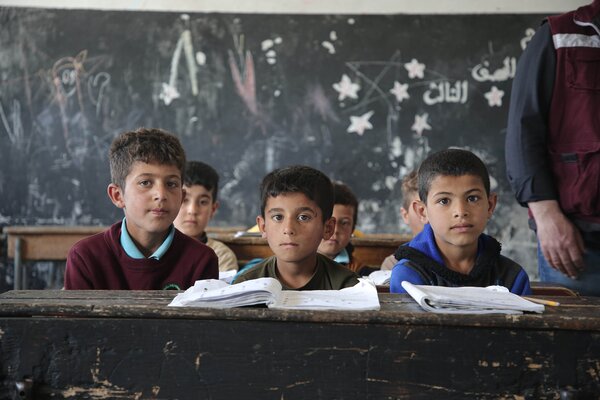
Children in Syria have endured over 14 years of armed conflict. Ongoing violence as well as devastating earthquakes have left millions of Syrian…

Uganda hosts Africa’s largest refugee population and has one of the world’s youngest populations. While the country has made significant progress…

Russia’s war in Ukraine has become a protracted humanitarian crisis, leaving millions of children in urgent need of assistance. War Child works with…
Latest news from Can't Wait to Learn
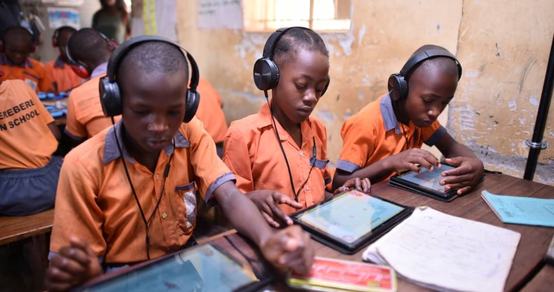
Can't Wait to Learn Qualitative Evaluation in Uganda
In the current climate of protracted crises and forced displacement, there is a growing demand for evidence-based and scalable education programmes. In 2020, War Child Alliance (WCA) was awarded a Global Partnership for Education Knowledge and Innovation Exchange (GPE KIX) global grant to generate knowledge and evidence on how education technology (EdTech) innovations can be adapted and scaled to improve education access and quality for refugee and displaced children in conflict-affected countries. KIX is a joint initiative by the GPE and the International Development Research Centre (IDRC) which aims to connect expertise, innovation, and knowledge to strengthen education systems and accelerate progress toward Sustainable Development Goal 4 in GPE partner countries. Our research (2020-2024) has taken place in Chad, Sudan and Uganda, centered on War Child’s flagship education programme, Can’t Wait to Learn.

Scaling Education Innovations: Findings from Multi-Country Research on the Adaptation and Scale-Up of Can't Wait to Learn in Low-Resource and Fragile Settings
WCA’s multi-year global research programme, “Bridges to impact through innovative educational technology: Forging links between policy, research, and practice”, supported by the Global Partnership for Education Knowledge and Innovation Exchange (GPE KIX), is designed to address the evidence gap on how to effectively adapt and scale up EdTech solutions in conflict-affected and low-resource settings. Implemented in Uganda, Chad, and Sudan between 2020 and 2024, with a focus on Can’t Wait to Learn, the research investigated the effectiveness, cost-effectiveness, and conditions required for successful adoption and scaling of EdTech solutions in low-resource and fragile contexts. Also, through the project, a complementary programme – SchoolLinks – was developed. SchoolLinks aims to increase children’s access, attendance, and retention in school by strengthening caregivers’ engagement in children’s education and the home-school relationship. It is designed to increase the cost-efficiency of Can’t Wait to Learn and other education initiatives, thus supporting their scalability. Through this research, WCA also generated valuable knowledge on government adoption of EdTech solutions, providing insights into the processes and conditions that facilitate successful integration of programmes like Can’t Wait to Learn into national education systems.
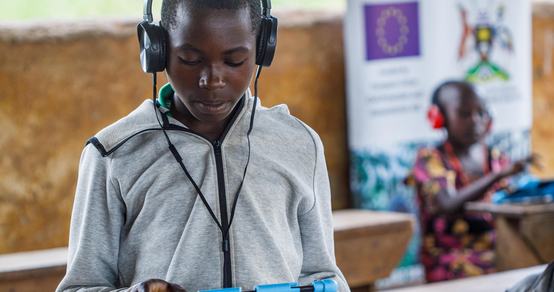
Can't Wait to Learn's Research and Scaling Journey: From Development to Scale-up
Can't Wait to Learn is a digital game based learning platform for education in emergencies. Since 2012 War Child has conducted research on Can’t Wait to Learn, not only to access its impact on children’s learning and psychosocial well-being, but also to develop and refine the programme and continually monitor and update the game to deliver the best learning outcomes for children. This evidence gives confidence to programme funders and implementers to continue working with Can’t Wait to Learn.

- Education
Prestigious UNESCO-prize for our education programme with tablets
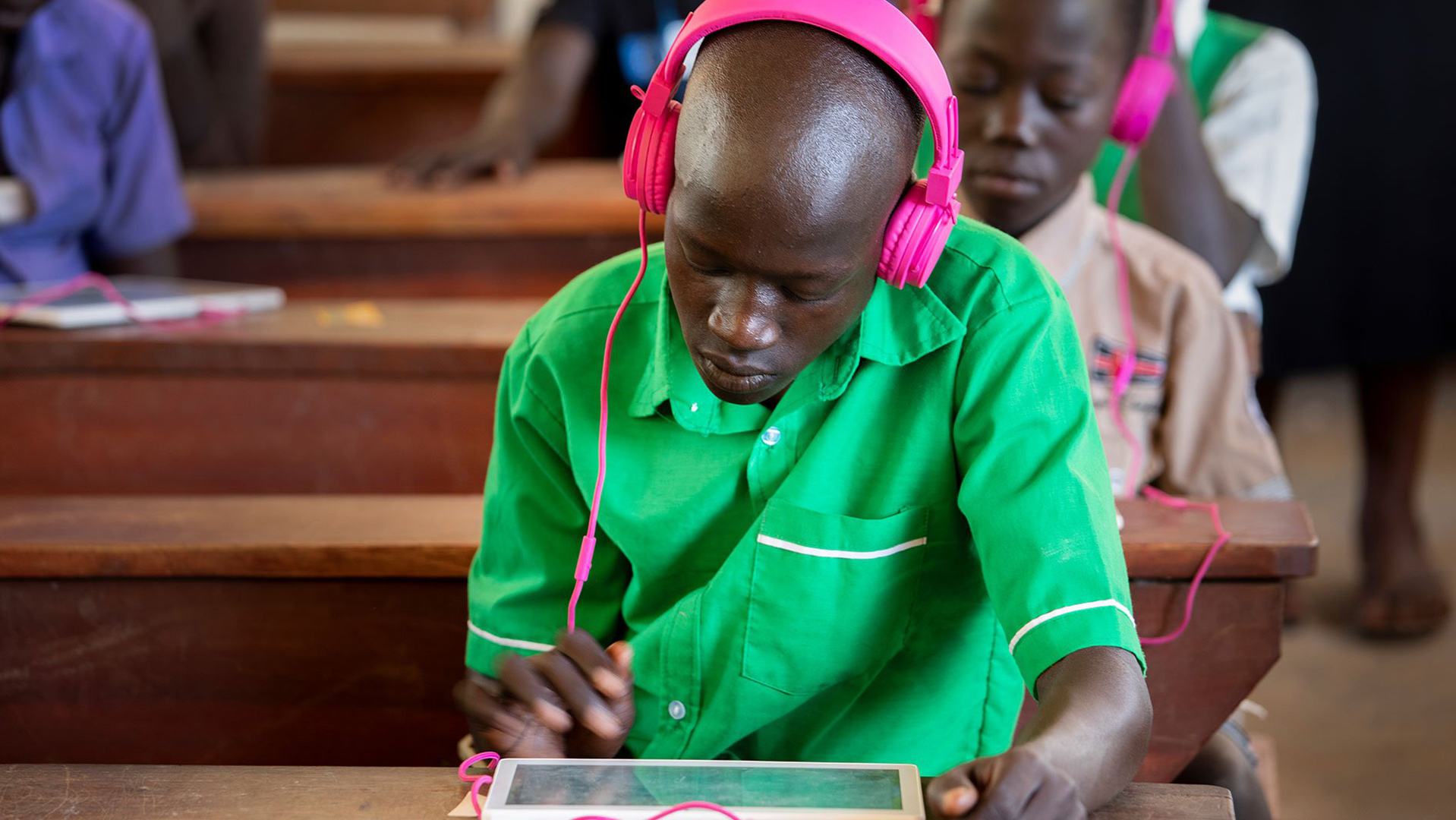
Can't Wait to Learn, our innovative programme providing education to children affected by conflict, was awarded a prestigious prize by UNESCO. The programme teaches children how to read, write and count by playing educational games on tablet devices. Read more on how we support children to reclaim their right to learn.
- Education
Games for Change nominates Can’t Wait to Learn
The annual Games For Change festival celebrates technological innovations that contribute to social good. The festival takes place this month in New York - and our transformative education programme Can’t Wait to Learn is nominated for two major awards.

- Education
Can't Wait to Learn among top 100 Social Innovations
Can’t Wait to Learn - the e-learning programme driven by War Child Holland and coalition partners - has been chosen as one of the top 100 innovations to help solve the world's most critical social challenges.
Often used in conjunction with

Parent wellbeing and skills
- Evidence based
- Mental health and psychosocial support

Teacher wellbeing
- Evidence informed
- Education
Teacher wellbeing
- Evidence informed
- Education

School attendance, re-entry and retention
- Evidence informed
- Education
Parent wellbeing and skills
- Evidence based
- Mental health and psychosocial support
